This post summarizes the results of my analysis of CFSA’s FY2023 data, compared to the data from FY2022 and previous years. Except when otherwise noted, the data is drawn from the Public Dashboard of the District of Columbia’s Child and Family Services Agency (CFSA), which provides data, updated quarterly, on the agency’s essential functions. My analysis showed a large increase in hotline calls in the last year, but a decrease in the number of investigations and substantiated claims of abuse or neglect. The foster care and in-home caseloads continued to fall, with a precipitous drop in the opening of in-home cases in particular. An important finding was the decline since 2019 in the number of in-home and foster case opened as a proportion of substantiated investigations. Taken together, the data suggest an agency that is withdrawing its core mission of responding to abuse and neglect in favor of new initiatives that are more in accord with the current ideological climate in child welfare.
There were 20,246 calls to the CFSA hotline (called “referrals” by the agency) in FY 2023. About 51 percent of the referrals came from school and daycare personnel; that share has increased to more than its pre-pandemic level of 42.9 percent in 2019. Nationally, teachers, made only 20.7 percent of referrals in FY2022. The District’s very different reporting pattern may reflect its educational neglect law, which requires teachers to make a report when a child has more than ten unexcused absences in a year.
Figure 1 shows the precipitous drop in referrals during the pandemic year of 2020, followed by an increase in FY2021, and a slight dip in FY2022. The total of 20,246 calls to the hotline in FY2023 was 20 percent above the total of 16,899 in FY2022 and even eclipsed that of the year before the pandemic. Most sources increased their reporting in FY2023, but much of the increase came from school and childcare personnel, who made 10,329 reports in FY2023 compared to 8,389 in FY2022. It is not clear why referrals increased so much in FY2023.
CFSA responded to the increase in referrals by screening out a larger percentage of these calls and accepting a smaller percentage for investigation. Out of the 20,246 referrals received in FY2023, CFSA hotline staff screened out 11,540 or 73.7 percent, compared to the 68.3 percent of referrals they screened out the year before, as shown in Figure 3. And they accepted only 19.3 percent, as compared to the 26.2 percent they accepted the year before. (Referrals not screened out or accepted were linked to an existing investigation or redirected to another agency). Hotline staff actually accepted significantly fewer referrals for investigation in FY2023 than in FY2022 despite the increase in referrals–a total of 3,902 accepted referrals in FY2023 compared to 4,429 the previous year, as FIgure 2 shows.
With fewer referrals accepted for investigation, there were naturally fewer investigations, as the height of the bars in Figure 4 shows.* The number of investigations that was substantiated (meaning the allegation of maltreatment was supported by the investigation) decreased from 861 in FY 2022 to 799 in FY2023, which was a drop of 7.2 percent. But the percentage of investigations that were substantiated did not change, remaining at about 21.5 percent of all investigations. So the decline in substantiations reflects the decline in the number of investigations initiated rather than a decreasing tendency to substantiate allegations.
Substantiated investigations can result in several outcomes, depending on the level of danger and risk to the child or children as estimated by Child Protective Services (CPS). if the child or children are deemed to be at low-or moderate risk, policy dictates that the family be referred to one of the Healthy Families/Thriving Communities collaboratives, nonprofits that are funded by CFSA to provide case management and other services. If the risk is deemed to be high or “intensive,” CFSA opens an in-home case. And if the child or children are assessed to be in imminent danger, the child is placed in foster care or an informal placement with kin or a family friend.**
Table 1 shows the number of substantiated investigations, in-home cases opened, and foster cases opened between FY 2019 and FY 2023. The table shows that the number of substantiated investigations has been falling since 2020. In-home case openings fell moderately from FY2020 to FY2022 and dramatically from 463 in FY2022 to 363 in FY2023, a drop of 21.6 percent. Foster care entries, which had fallen rapidly between FY2019 and FY2022, fell less dramatically in FY2023, perhaps beginning a leveling trend after years of rapid decline. The total of in-home cases opened plus foster care entries (in other words, the total number of cases opened) fell from 886 in FY2019 to 542 in FY2023, a drop of 38.8 percent. From FY2022 to FY2023, total cases opened dropped by 18.4 percent. The number of In-home and foster care cases opened as a percent of substantiated investigations over the five-year period has dropped considerably since 2019, from 88.2 percent in FY2019 to 67.8 percent in FY2023, indicating a reduced likelihood of opening a case when an allegation has been substantiated.
Table One: Substantiations, In-Home Cases Opened and Foster Care Entries, FY2019 – FY2023
Fiscal Year
2019
2020
2021
2022
2023
Substantiated investigations
1004
1035
920
861
799
In-Home Cases Opened
499
500
442
463
363
Foster Care Entries
387
217
251
201
179
Cases opened (In-Home Cases Opened Plus Foster Care Entries)
886
717
693
664
542
Cases opened as a percent of substantiated investigations
For a longer-term view, Figure 5 shows the number of children served in-home and in foster care on the last day of the fiscal year (September 30), using historical data from CFSA’s most recent Annual Needs Assessment.*** In 2010, about as many children were served in foster care as in their homes, but since that time the proportion of children served in their homes has risen, standing at 66.0 percent in September 2023. The foster care caseload has decreased every year and shows signs of starting to level off. The in-home population has also declined over time, though less steadily. The number of children served in their homes, though still much larger than the foster care population, has fallen much faster than the latter in recent years, dropping from 1,290 on September 30, 2021 to 962 on September 30, 2023. The total number of children served in home and in foster care has fallen from 4,194 in FY2010 to 1,458 in FY2023, a drop of 65 percent. And it dropped by a precipitous 33.6 percent between FY 2019 and FY2023. The “footprint” of CFSA, in terms of essential services, has shrunk dramatically.
CFSA is pushing back against any impression that it is serving fewer families and children, as shown in the graphic displayed below from the latest Annual Needs Assessment. To the foster care and in-home populations (the same numbers shown in Figure 5) they add two more populations starting in FY 2019 — children and families they categorize as “Front Porch” and “Front Yard.” The agency defines “Front Yard” as families not yet involved with CFSA “but facing challenges that could put them at risk of coming to the agency’s attention.” It defines “Front Porch” as “families known to CFSA, both with and without an open case.”**** These “Front Yard” and “Front Porch Families” are being served by the Healthy Families/Thriving Communities Collaboratives using CFSA funds, rather than directly by CFSA.
Adding the “Front Porch” and “Front Yard” children to the children served in their homes and in foster care gives the impression that the number of children and families served has not fallen but in fact has increased in recent years. That may be technically true, but there are serious problems with that assertion. First, the total number of children served by the Collaboratives began declining in FY2021, and it is not clear what the future holds. Second, the services provided by the Collaboratives are typically much less intensive (and therefore cheaper) than CFSA’s in-home services. Collaborative case managers are generally not licensed Masters-level social workers and have much higher caseloads than CFSA in-home workers. Therefore, they often do not have the time or the skills to to provide the same level of services. Collaborative services have had a dubious reputation over the years; one of the first things I heard as a social worker at a private District agency managing CFSA foster care cases is how one could not expect any meaningful services from a collaborative. As a matter of fact, CFSA tried to end its contracts with the Collaboratives in FY2018 under the previous director, Brenda Donald. But the outcry from Collaborative staff and community members (perhaps recruited by the Collaboratives themselves) led her to renew the non-competitive contract for the collaboratives.
Third, it is not obviously sensible to divert CFSA funds to families in the “Front Porch,” and especially the “Front Yard,” when the agency is clearly not doing enough for the families currently receiving in-home services. The latest needs assessment focuses on in-home services and is sobering reading. In-home caseworkers responding to a survey reported that the most common barriers that caregivers display (daily parenting behavior, substance abuse, and mental health) barely change between the opening and closing of an in-home case. Only a quarter of the in-home cases reviewed by CFSA’s internal reviewers demonstrated “good progress.” CFSA concluded that the lack of progress in the other three-quarters of cases was due to the lack of parental engagement in services. CFSA’s responses to oversight questions from the Committee on Facilities and Family Services show that of the 503 in-home cases closed in FY 2023 and the first quarter of FY 2024, 214 (or 40 percent) of the families have already been the subject of a hotline call after the case was closed. My study of deaths of children known to CFSA between 2019 and 2021 showed that four of the deaths occurred while an in-home case was open for the family. Three other families had had one or more in-home cases that closed before the children died.
The data analyzed here show that from FY2010 to FY2023, CFSA has been serving fewer families with in-home services and foster care. In the last year, the decline continued even as calls to the hotline increased. During that last year, it is the rejection of a higher number of referrals and the reduced likelihood of opening a case when a referral is substantiated that account for the decrease in families served. But what is the actual cause of these trends?
There is more than one possible explanation for the rejection of more referrals and the opening of fewer cases for each substantiated referral. Like other child welfare agencies, CFSA is struggling with a staffing shortage. Perhaps the lack of staff in all units is constraining the ability to conduct investigations and staff the number of cases that are needed. That could result in hotline workers accepting fewer referrals and CPS workers referring more families to the collaboratives instead of to in-home services.
Another factor that is clearly at play is a changing perception of the agency’s purpose. CFSA’s leadership seems unenthusiastic about its primary mission of responding to child abuse and neglect. Agency management craves a less reactive role, adding the prevention of child maltreatment to the agency’s other responsibilities. As Director Robert Matthews likes to say, and repeated in his oversight testimony, he wants to transform CFSA “from a child welfare agency to a child and family well-being system.” That’s why the agency has gone even further beyond its core mission in its Families First DC initiative, attempting to reach even beyond the front yard to work with any family living in one of the disadvantaged communities where they have funded Family Success Centers that provide a wide variety of services and activities. But the agency seems to disregard the fact that these programs are likely to attract the families that are the least at risk of child maltreatment.
CFSA’s approach is in tune with the messages that are coming from the federal government and the powerful foundations and nonprofits that heavily influence the national child welfare agenda. These organizations disparage the “family policing” functions of child welfare and recommend, if not abolition, a drastic reduction in its traditional functions of investigations, in-home services, and foster care. By being in tune with the Zeitgeist, CFSA puts itself in the pipeline for grants, awards, and positive attention from the federal government and private funders. Moreover, CFSA leaders also appear believe passionately in the currently dominant orientation.
The allergy to “reactive” services is telling. Many agencies have reactive missions–police, firefighters, emergency rooms–and one could argue these are the most important services of all because they save lives and prevent serious injuries. The analogy with the police cannot be ignored. Police react to allegations of crime just as child welfare agencies react to allegations of child abuse and neglect. To prevent crime, we must not rely on the police, who are overburdened already and not trained and equipped to provide the services needed. Instead we must turn to a whole host of agencies dealing with education, public health, mental health, housing, income security and more–the same agencies that we must mobilize if we want to prevent child abuse and neglect.
It is still interesting to speculate on how the rejection of more hotline reports by hotline workers and the reduced number of referrals to in-home services by CPS workers has been (and is being) accomplished in practice. Both the acceptance of referrals and the assignment of a risk level are governed by actuarial assessment instruments. But as a former social worker in the system, I know that these instruments can be completed so as to obtain the desired response. Perhaps that is the answer or perhaps the instruments have been changed. I wish the Council’s oversight committee for CFSA would ask the agency this question.
CFSA’s data for FY2023 provide new evidence that the agency is withdrawing from its primary mission of protecting children who have already been abused or neglected in favor of reaching out to families that have not been reported to the agency. This is particularly evident from the decrease in referrals accepted for investigation, the decreasing proportion of open cases as a percentage of substantiations, and the increased emphasis on serving, through the collaboratives and the family success centers, families that are not currently involved with CFSA. With total budgetary resources decreasing, there is reason to fear that abused and neglected children are less protected every year as CFSA spreads its resources more and more thinly.
Notes
*While the number of referrals accepted for investigation was 3,902 in FY2023 according to the Dashboard’s Hotline Calls by Referral Type graphic, the total number of investigations displayed in the Investigations by Disposition graphic was 3,704. The reason for the difference is unclear. According to the Dashboard, “accepted for investigation” means that “the hotline call resulted in a new investigation being opened on the family.” So the two numbers should be the same.
**Such an informal placement may occur before substantiation as well.
***These data do not exactly agree with numbers that I have collected from the CFSA dashboard over the years. I have also noticed that Dashboard data for the same period, particularly in-home case data, has changed over time.
**** It appears that those with an open CFSA case qualify as Front Porch families if they are receiving collaborative services as well as in-home services from CFSA, but this is confusing and suggests the agency may be double-counting families by counting them in both the “in-home” and “front porch” populations. The agency cites a different definition of Front Porch families in its 2023 Annual Public Report, saying that the term refers to “families that have already been the subject of a CPS investigation but did not present with safety or risk levels that warranted opening a child welfare case.
Good afternoon! Thank you for the opportunity to testify today. My name is Marie Cohen and I live in Ward 6. After my first career as a policy analyst and researcher, I became a social worker and served in the District’s child welfare system until 2015. Soon after leaving that job, I joined the Citizen Review Panel on CFSA, on which I served for four years, and then the Child Fatality Review Committee, on which I served for six years. I began writing a blog, which later became Child Welfare Monitor. I am proud to say that my blog is read by some of the leading policymakers, advocates, and academics in the field. I take a child-centered approach, placing the safety and wellbeing of the child above all other considerations.
On October 22, 2022, police were called to Stanton Road, SE, for a report of an unconscious child. By the time they arrived, Journey McCoy had already been transported to United Medical Center, where she was pronounced dead.[i] According to WUSA-9, Sasha McCoy, the child’s mother, reported that around 8:30 a.m. her daughter came from the back bedroom of the house and said she was hungry. McCoy gave her a Jell-O cup and went back to sleep. Around 1 p.m. she was awakened to two of her four children rummaging in the refrigerator. Instead of feeding them she put both children down for a nap and went back to sleep on the couch. Such reports of parents sleeping through their children’s days, without regular bedtimes or mealtimes, are classic symptoms of what child welfare experts call chronic neglect. Sometime later, Ms. McCoy woke up again and found her child unconscious with yellow mucus coming out of her mouth.
On October 22, 2022, police were called to Stanton Road, SE, for a report of an unconscious child. By the time they arrived, Journey McCoy had already been transported to United Medical Center, where she was pronounced dead. According to WUSA-9, Sasha McCoy, the child’s mother, reported that around 8:30 a.m. her daughter came from the back bedroom of the house and said she was hungry. McCoy gave her a Jell-O cup and went back to sleep. Around 1 p.m. she was awakened to two of her four children rummaging in the refrigerator. Instead of feeding them she put both children down for a nap and went back to sleep on the couch. Such reports of parents sleeping through their children’s days, without regular bedtimes or mealtimes, are classic symptoms of what child welfare experts call chronic neglect. Sometime later, Ms. McCoy woke up again and found her child unconscious with yellow mucus coming out of her mouth.
During the ensuing investigation, police learned that Sasha McCoy, was known in her neighborhood for using drugs and being constantly high. McCoy admitted to using Percocet daily, including the morning of the day her daughter died. When the CFSA investigator offered her a referral to drug treatment she responded, “this is not the time. I am going to get high as a “mother f-er when I leave.” Seven months later, the autopsy came back. The cause of death was fentanyl intoxication. McCoy was arrested and charged with first degree felony murder and cruelty to children. During the fatality investigation, CFSA and police learned that the mother was living with a known drug dealer. She admitted to the use of unprescribed drugs, which she failed to secure away from the children. The dead child’s sibling has been placed in foster care.
CFSA knew about McCoy before her daughter’s death, as described in the agency’s newest annual fatality report, which focuses on deaths of children in families known to CFSA in the previous five years.[i] Within five years of the three-year-old’s death, the family had three CPS investigations, one family assessment, and two open in-home cases. According to WUSA9, one of these cases was opened in 2020 when the same little girl as a baby ingested marijuana at a party McCoy was hosting. Social workers found three children unsupervised inside the home. The case was eventually closed. Another case was opened In August 2021 after McCoy’s newborn had symptoms of withdrawal. McCoy acknowledged using Percocet daily throughout her pregnancy. That case remained open until February 3, 2022, eight months before the fatality. Surprisingly, the agency did not observe any evidence of drug use or concerns for supervision during the two open in-home cases. (This is hard for me to believe, unless the mother evaded social worker visits, as happened with many of the cases I reviewed.) Nevertheless, CFSA reported that “case notes indicated the mother resisted the Agency’s efforts to engage her and she was inconsistent with participation in services.”
“We are not here to save children.” That is what I was told on the first day of my training as a child protective services worker at CFSA. And indeed, the District of Columbia is on the cutting edge of the current movement in child welfare that considers child protective services as a “family policing system” that unnecessarily harasses and separates families, especially families of color. But some families do not provide a safe environment for children to grow and develop. In some of these families, children die. That is what happened to the 16 children whose cases are discussed in my recently released report.
Why do I study fatalities among children known to CFSA? For the same reason that CFSA studies these deaths. As the agency states in its 2023 Annual Child Fatality Report, seeing where the system may have broken down helps it identify strategies that may prevent such deaths in the future, which is why the agency makes recommendations at the end of these reports. But it is more than that. The same conditions that lead to child fatalities also lead to harm for many more children. In that sense, child fatalities are the tip of the iceberg of child maltreatment, giving us a window on what is happening to other children who may be invisible to us.
The report is based on information I received from CFSA on the deaths of 16 children between 2019 and 2021—before the death I described earlier. These children came from families that had previous contact with CFSA. Their deaths were either ruled to be caused by child abuse or neglect or the Medical Examiner could not rule out child abuse or neglect as contributing to the cause of death.” District law requires the release of information on these deaths, but CFSA interpreted that law restrictively. Several deaths were not included because they were ruled to be accidents, although parental neglect clearly contributed to these deaths. For example, the death of seven-week-old Kyon Jones, whose mother told police that she threw his body in a dumpster after she rolled over him while high on PCP, was not included because his body was never found and could not be autopsied. A child was left in a baby swing for two hours was also included because his death was deemed accidental.
In addition to omitting some cases in which neglect or abuse played a role, CFSA heavily redacted the information it did provide, with many pages and large blocks of text blacked out. This included most information about the parents’ issues with drugs, alcohol, or mental health and almost the entire history of agency involvement in most cases. Despite the limited information provided, the redacted summaries included some disturbing new information.
Causes of Death
The most common causes of death among the 16 children were blunt-force trauma and opioid poisoning, each claiming the lives of three children. This included Makenzie Anderson, who was murdered by her mother, and Gabriel Eason, who was the victim of long-term torture and beatings by his stepfather, as his mother stood by. The third case of blunt-force trauma was a three-year-old girl in the home of an aunt where she was placed by CFSA. Nobody has been charged for this murder. Another three children (a three-year-old girl, a three-year-old boy, and a three-month-old girl) died of poisoning by a controlled substance, with fentanyl implicated in all three cases. The remaining children died from drowning, asphyxia, “thermal and scald injuries,” injuries from a car accident, and unknown causes, a few of which may not reflect maltreatment.
Demographics
A quarter of the children who died were younger than six months old and half were one year old or younger. Another quarter were two or three. This is not surprising as young children are more vulnerable and similar results are found nationally. But older children were not invulnerable to abuse or neglect, including the seven-year-old who died in a car accident and a 12-year-old who died of an untreated bacterial infection and pneumonia.
All of the decedents were Black: fifteen were African American and one was classified as “African-biracial.” According to the latest data from Kids Count, 54 percent of children in the District of Columbia are Black. So Black children were overrepresented among the children who died of maltreatment or possible maltreatment. Yet, the District is trying to reduce racial disparities in system involvement. It sounds to me like a way to make Black children less safe, not more equal.
The prevalence of large families among those that lost a child due to abuse or neglect is striking, though not surprising, because research shows that large families are associated with child maltreatment. More than two thirds of the mothers of children who died by maltreatment had four or more children. The average mother in the group had 4.6 children, often with more than one father. This is not surprising, because larger number of children are associated with child maltreatment. The challenges of parenting multiple children clearly contribute to a child’s risk of being abused or neglected and dying of that maltreatment.
Histories of System Involvement
Most of the families that lost a child had experienced multiple reports prior to the fatality. Among the 16 fatalities included in this report, only six occurred in families that were the subject of five reports or fewer in the last five years. Five occurred in families that had between six and 10 reports, three occurred in families with 10 to 15 reports, and one family had 24 reports. Three of the families had experienced a previous child fatality–a shocking statistic considering the rarity of child fatalities overall.
Substance abuse by the parent or caregiver (including positive toxicology of a newborn) was the most frequent allegation CFSA received regarding the families in the five years before the deaths. Substance abuse by the parents was observed or alleged in the families of all but four of the victims included in this report. Inadequate supervision and educational neglect were the next most common. Ten of the 15 families had at least one report for educational neglect and ten for inadequate supervision before the child’s death. Another major theme was exposure to domestic violence, which was mentioned in nine of the 16 case histories as the subject of an allegation or in notes from social workers or police.
A 17-month-old boy died of “thermal and scald injuries.” His mother had no idea how he got injured. She said he was sleeping on the floor next to her bed when she went to sleep at 7:00 PM, but he often slept next to the radiator in the living room because she kept the air conditioning on high and he got cold. She reported that one of her five other children woke her at about 3:00 AM and showed her large pus bubbles on the child’s thigh and lower leg. She told the girl to bring him to another room and planned to clean the wound in the morning, for fear of being reported to CFSA. She reported having no idea why he was found in the bathtub with his face down at about 7:00 AM.
System Failures
The information received suggests several areas where failures in policy and practice by CFSA may have allowed these deaths to happen. These areas include screening and investigation. Many reports on these families were screened out hotline staff, perhaps inappropriately. The Office of the Ombudsperson for Children (OFC) reports that it received complaints from constituents about referrals that were screened out inappropriately; OFC itself had concerns about several referrals that were screened out. OFC also heard from school staff who reported receiving no feedback after submitting multiple reports on the same family.
Flawed investigations may have also allowed these fatalities to happen, as these families had many unsubstantiated investigations. The details of most investigations were completely redacted, so I cannot give many examples of possible flaws. But Gabriel Eason, who was beaten to death by his stepfather, was the subject of an investigation five months before his death, after he showed up at childcare with two bruised ears. The CPS investigator did not seem concerned about the mother’s lack of knowledge of how the injury was acquired, her offering of multiple possible explanations, and the question of how playing rough with his siblings on running into furniture could result in bruises on both sides of his face.
Management of in-home cases was revealed by these fatalities as an area of concern for CFSA. Four of the deaths I reviewed here happened while an in-home case was open for the family, yet in three of these cases, workers struggled to complete face-to-face visits with the families because parents evaded these visits. Three other families had had one or more in-home cases that closed before the children were killed. In the Needs Assessment it recently released, CFSA focused on its in-home services and found little evidence for optimism about their potential to help children. By caseworkers’ own assessment, the most common barriers that caregivers display (daily parenting behavior, substance abuse, and mental health) barely change between the opening and closing of an-In-Home case. Only a quarter of the In-Home cases reviewed by CFSA’s internal reviewers, demonstrated good progress according to these reviewers, despite the good clinical skills of the social workers. CFSA concluded that the lack of progress in the other three-quarters of cases was due to the lack of parental engagement in services.1 CFSA’s oversight responses show that of the 503 in-home cases closed in FY 2023 and the first quarter of FY 2024, 214 (or 40%) of the families were the subject of a hotline call after the case was closed.
In the three open cases where parents evaded social worker visits, social workers and supervisors could have used the “community papering” option to file a petition to involve the court. But they did not exercise this option–or they started too late. In one case, a three-year-old had been left alone on her stomach with a bottle while her mother went across the street to retrieve and smoke a cigarette. During the in-home case resulting from that fatality, the case manager made multiple unsuccessful attempts to see the mother and her three surviving children. Due to the mother’s failure to engage and the children’s continued absence from school, the case manager scheduled a meeting with legal staff to consider community papering. That meeting was scheduled for December 8, 2021 and was canceled after CFSA learned of the three-year-old’s death of fentanyl poisoning on December 3.
In the FY2025 Needs Assessment, CFSA stated that “[h]istorically, QSR reviews have shown that parents’ active participation and engagement in services, and their ambivalence to work with the Agency, remain a challenge for the In-Home Administration. Despite training inevidence-based skills [such as motivational interviewing] social workers continued to face multiple challenges for achieving positive outcomes. . . Challenges for the social work team and the families included complicating factors such as unresolved (or insufficiently addressed) family histories of trauma, substance use, mental illness, cognitive challenges, and parenting capacity with multiple children.
Recommendations
The Council should change the law to mandate release of Information on child maltreatment fatalities. Sadly, CFSA’s internal fatality committee, which reviewed the full record of these cases, does not do a good job of making recommendations. The 2022 report had no recommendations for CFSA other than it should participate in districtwide discussions about violence prevention; its other recommendations referred to other agencies, like better information sharing and a safe sleep campaign. We certainly cannot rely on CFSA to learn from its mistakes. Therefore, my first recommendation is to the City Council, urging it to require that CFSA follow the example of states like Florida, Arizona, and Wisconsin, andrelease detailed historical information on child fatalities, with certain identifying information redacted.
CFSA should Improve the hotline and investigations through training and specialization: I endorse the OFC’s recommendation for enhanced training for hotline staff so that reports are screened adequately to ensure the safety of children. In addition, school absences should be investigated regardless of the age of the child (requiring a change in the law) and their academic performance. Investigative workers could benefit from better training in forensic interviewing techniques that might help them better evaluate parents’ and children’s’ statements for veracity and perceive more subtle signs of abuse or neglect. Another option is to reinstate the Special Abuse Unit so that cases of physical and sexual abuse are handled by workers with forensic interview training.
CFSA must recognize that in-home cases need to be more intensive and longer for chronically neglectful families: CFSA must also strengthen its in-home practice, perhaps by reinstating the Chronic Neglect Units, which were eliminated barely a year after they were implemented. These units would employ specially trained social workers with lower caseloads and longer time periods to work with families.
The agency must reduce any barriers to the use of “community papering,” perhaps making court involvement routine after a certain number of missed visits or other instances of noncooperation, or if a family that is offered in-home services after an investigation refuses the offer. The case narratives make clear that social workers struggled to complete home visits to the families of the children who later died, and yet community papering was either not initiated, or initiated too late. According to the recent Needs Assessment, the agency presented over 300 children with in-home cases for community papering in FY 2021, FY2022 and the first quarter of FY2023.[iii] But my study suggests that these petitions must be made sooner and more often.
It is often said that we should not make policy based on extreme cases. But I have a different view. Extreme cases are the tip of the iceberg. Every child who dies, represents multiple other children who are suffering or at least failing to thrive as they live with abuse or neglect. Studying fatalities can help identify system failures that allow many more children to languish in abusive or neglectful homes, growing up in fear or pain, or without the essential nurturing necessary for normal child development.
CFSA also found that when an In-Home case is opened, a family’s risk of child removal decreases by 15 percent within a year. But the likelihood of a new investigation increases by 10 percent within the year. CFSA speculates that perhaps the subsequent Investigation ends up prolonging the in-home case by starting a new In-Home episode.
CFSA’s newest Child Fatality Review Report focuses on the deaths of 29 children and young adults whose families were known to CFSA within five years of their deaths and whose cases were reviewed in 2021. This report’s toll includes one mother who lost two little children in one year–one who died of fentanyl poisoning and another left alone with a four-year-old sibling and a propped bottle. It included four overdose deaths from synthetic opioids and ten “non-abuse” homicides including the shooting of a six-year-old at 11pm outside a liquor store. It included a twelve-year-old who died of an untreated bacterial infection but had signs of abuse on her body. Most of the dead children’s families had been reported to CFSA at least four times in the past five years. Many of them had experienced investigations and received CFSA-supervised services. Nevertheless, these children died within five years of their contact with CFSA. But the agency’s child fatality reviewers made no recommendations to improve screening, investigation, or services. That is not a surprise, given the agency’s current tendency to minimize intervention in the lives of troubled families.
When a child known to a child welfare agency dies, a natural question is whether the agency could have prevented that death if it had done more or different things. For that reason, fatality review is an important way to assess the performance of a child welfare agency, both internally and externally. According to an appendix to the report, the mission of the CFSA Child Fatality Review (CFR) Unit is “to reduce the number of preventable child fatalities in the District of Columbia through identifying, evaluating, and improving programs and systems responsible for protecting and serving children and their families.” CFSA’s 17th annual Child Fatality Review Report, based on the work of the CFR Unit, was released on January 30, 2023.1
Before 2019, CFSA followed the common practice of including in a given year’s CFR report all of the fatalities it reviewed during that year, even if they occurred during previous years. This makes sense as these deaths were never discussed in earlier reports. But for the third year in a row, CFSA chose to eliminate some cases from its analysis based on when they occurred. The new CFR report includes only those deaths that occurred during 2021 and were reviewed in the same year. That means their analysis includes only 29 child fatalities instead of the total of 51 fatalities they actually reviewed in 2021. The rest of those fatalities occurred in 2018, 2019, and 2020. See the Note on Timing appended to this commentary for further discussion of this issue.
Manner of Death
The manners of death2 of the 29 young people whose cases are included in the body of the report are displayed in the pie chart below. About a third of these decedents were victims of “non-abuse homicide;” six (or 21 percent) died of accidents; four (or 14 percent) died of natural causes; and three (or 10 percent) died of “neglect homicide.” The other six children’s manners of death were “undetermined” or “unknown.”
Three, or 10 percent of the deaths reviewed in this report, were labeled as “neglect homicides.”(There were no homicides attributed to abuse). All of the victims were age three or under, which is typical of child maltreatment fatalities nationally as well. One of the three was a 17-month-old with “thermal and scald” injuries. The two other fatalities both involved synthetic opioid toxicity, illustrating the spread of this crisis to the District of Columbia. The second fatality was a three-month-old who died of synthetic opioid (eutylone and fentanyl) toxicity and the third was a three-year-old boy dead of fentanyl toxicity.The families of the 17-month-old and the three-year-old both had more than ten hotline calls and had open in-home cases at the time of the fatality.
Non-abuse homicide
By far the most common manner of death reviewed in this report was “non-abuse homicide,” or homicide that was not the result of child abuse. Such “non-abuse homicides” were one-third of all deaths reviewed; eight of the decedents were male and two were female. One victim was only six years old; the remainder were aged 13 and older. Nine of these deaths were caused by gunshot wounds and one was caused by stab wounds. One of the victims was in foster care with a relative at the time of his death. He had been removed from his home in 2015 due to abuse and neglect.
Natural Causes
Three fatalities, or 10 percent of the deaths included in the report, were due to natural causes. All of these children had congenital anomalies. They included a four-day-old girl and a three-year old boy who were both born prematurely and were medically fragile. Both of their families had open cases with CFSA. The three-year-old had been placed with a foster parent experienced in caring for medically fragile children after his mother was determined to have neglected him and was determined to be ill-equipped to care for a medically fragile child.
Accidental Deaths/Unsafe Sleep:
The manner of death was deemed to be accidental for six, or 21 percent of the deaths reviewed. Unsafe sleeping arrangements were involved in three of these six deaths of babies whose ages ranged from 19 days to two months old. In all of these cases, asphyxia was included as a cause of death. Of the remaining accidental deaths, two girls aged 16 and 17 died of opioid overdoses. Both deaths were part of a spate of fatalities in June 2021 that the police attributed to a tainted batch of fentanyl. The final accidental death was that of a four-year-old child who was hit by a car. An observer reported that he wandered away from his mother and two younger siblings before being hit.
Undetermined and unknown
Four of the fatalities were classified as undetermined because the autopsy findings were inconclusive. In one case, the mother left an 11-month-old and her four-year-old sibling sleeping alone in the home, and returned to find the baby unresponsive and foaming at the mouth. In a re-enactment using a doll, the mother demonstrated placing the child on her stomach with a bottle in her mouth in a way that could have impeded her breathing, but the medical examiner was unable to confirm asphyxia as a cause of the baby’s death. In the wake of the fatality, CFSA opened an in-home case to help the mother and her children. But that was not enough to save her three-year-old, who died within six months of opioid toxicity while the in-home case was still open, and was one of the three neglect homicide victims mentioned above. Unsafe sleep environments were involved in two of the other deaths for which the manner was undetermined.
The fourth death for which the manner was undetermined involved a twelve-year-old girl who reportedly collapsed after choking while eating soup. However, the hospital physician observed bruising on the child’s abdomen, back and legs, the mother was found to have abused her, and two siblings were removed from the home. The official cause of death was an untreated bacterial infection coupled with pneumonia but the manner could not be determined.
There were three deaths for which the manners were unknown. A seven-week old boy was reported missing by his father and is presumed dead. The mother was charged with suspected concealment or removal of the body and her other three children were removed from her. Unless there were two babies close to two months old who were reported missing in 2021 under the same circumstances, this is a case that received considerable media attention. The mother told the baby’s father that he had been removed by CFSA. Eventually she told police that she accidentally rolled over her son while under the influence of PCP, then panicked and threw his body into the trash. She was initially charged with murder but the charges were dropped as a body was never discovered. According to police, the mother was stabbed to death by the father in April 2022.
The remaining deaths for which the manner is unknown involved a newborn removed by Caesarian from a mother dying of Covid-19 and a seven-year-old who died in a house fire, for whom autopsy results are pending.
Decedents in Foster Care at TIme of Death
Two of the decedents were in foster care at the time they died. One was the eighteen-year-old who was living with a relative after being removed from his abusive mother, and who was the victim of a non-abuse gun violence homicide. The other victim was the medically fragile two-year-old, who was dependent on a gastrostomy tube and a tracheostomy vent, who died of natural causes and was living with a foster parent who specialized in caring for medically fragile children.
Family Risk Factors
The report provides some demographic information about the parents of the children who died, and that information is in line with research evidence that teen parenting, large families, and a parent’s history of maltreatment as a child are risk factors for child maltreatment. Parents of the children who died tended to be very young when they started having children. Sixty-nine percent of the mothers and 58 percent of the fathers were under age 21 at the birth of their first child. The youngest mother was 13 years old when she gave birth to her first child and the two youngest fathers were 16. Many of the dead children came from large families, which is more common among those who start having children at an early age. All but four of the 29 decedents had two or more siblings. Thirteen had four or more siblings; three had seven or more siblings, including two with 12 siblings and one with 10 siblings. A parent’s maltreatment history as a child is also known to be a risk factor; 13 of the 29 birth mothers had CFSA involvement as children, and both parents of two of the decedents were involved with CFSA involvement in their childhood.
Parents’ CFSA History as Caregivers
Nine of the 29 families reviewed in the report (or about a third) were involved with CFSA at the time of the fatality. Of these nine families, two had an open investigation and five had an open in-home case. Two had an open foster care case, but those are presumably the families of the two children who died while in foster care.
Table 7 shows that 10 families (or more than a third of the 29 families) had CFSA involvement within 12 months of the fatality – only one more family than was involved at the time of the fatality. It appears that all of them had an investigation within that period. However, with fewer families reported to have an in-home or foster care case than in Table 6, there must be some errors in the data; CFSA has not yet responded to a request for clarification.3
Looking at the 17 families that did not have CFSA involvement at the time of the fatality (Figure K in the report)4 CFSA found that the time since they were involved varied from 1 to 56 months, and that 11 of these 17 families (65 percent) were last involved with CFSA more than 18 months before the fatality.
As shown in Figure J, the majority of the families had four or more reports to the hotline (known as referrals) during the five years preceding the fatality. Many of these reports were screened out, as shown in Figure Q. All but 4 of the 29 families had referrals that were screened out during the five-year-review period and ten of those families had five or more referrals screened out.
Table 8 summarizes the results of the reports received regarding these families. The large majority of these families (23 families or 79 percent of families) were investigated at least once , with an additional 6 families investigated twice. Twelve families (41 percent of families) had in-home cases within five years of the fatalities, with eight having one case, three having two cases, and one having three cases.5,6
Figure L in the report (not reproduced here) shows that 16 families, or slightly more than half of the families, had at least one substantiated allegation in the five years before the fatality. Ten of these families had only one substantiation and the remaining families had between one and four substantiated allegations. The most common substantiated allegations were inadequate supervision and educational neglect (four families each), followed by physical abuse, failure to protect, medical neglect and indadequate food/clothing/hygiene (three families each).
“4+ Staffings“
One CFSA practice that is designed to prevent further harm to children known to the system is the “4+ Staffing.” CFSA conducts these meetings for families that have four or more referrals, with the last referral occurring within the past 12 months. These staffings are supposed to uncover gaps in past practice or service delivery that may have contributed to the repeated maltreatment and to find strategies to prevent future maltreatment. In the 2020 CFR report, CFSA stated that of the decedents’ families who had qualified for such a staffing during the five years before the fatality, all had received a 4+ Staffing. Clearly, this figure casts doubt on the effectiveness of these staffings. Unfortunately, the analogous section of the current report appears to focus on the percentage of eligible families that received a 4+ staffing after the fatality, a fact that is less relevant to the purpose of CFR.7
Siblings removed after child fatalities
A new report section states that 11 children were removed from four families in the wake of the child fatalities reviewed in the report.
After an 11-month old girl was left alone with a four-year-old sibling and a propped bottle, the agency opened an in-home case for the family. But when her three-year old brother died of fentanyl intoxication within six months of his sister’s death, the other children were removed and placed with kin. At the time of the writing of the report, their goal was reunification with the parent, who was said to be “receiving services, including grief counseling for the loss of more than one child within a short time frame, as well as substance use and housing.”
The siblings of the 12-year-old girl who died of an untreated bacterial infection but also had signs of physical abuse have already been returned home. CFSA states that the mother and children have received mental health services and the mother has completed court-ordered parenting education.
Of the three siblings of the infant boy who disappeared, one child was with her father at the time of the report’s being written and the other two were placed in foster care with a goal of reunification.7
The 17-month-old who was scalded to death had four siblings, ranging in age from five months to twelve years old, who were all removed from the mother in the aftermath of the toddler’s death. Two were placed with kin and two in a mysteriously named “non-foster care placement,” which probably connotes placement with kin outside the foster care system. There is no mention of reunification; perhaps this case qualified for the exemption from reunification that is allowed under certain aggravated circumstances.8
CFSA’s Findingsand Recommendations
In its Summary of Critical Findings, the CFR report discusses specific areas that received “additional focus” in 2021, including screened-out referrals. Concerns about the accuracy of hotline decision-making have been expressed in the District and around the country. In a 2016 study, conducted by the Center for the Study of Social Policy, the court monitor in the LaShawn class action suit, reviewers disagreed with CFSA’s decision to screen out the referral in 27 percent of the referrals studied. However, the report does not suggest any review of policy or practice in screening out referrals. Instead, it cites the “prevention services” provided by the collaboratives and the family success centers. The report also devoted special focus to families involved with CFSA at the time of the fatality, unsafe sleep fatalities, and gun violence, but the report makes no suggestions about how to avoid such fatalities involving these factors.
Based on its fatality reviews, CFSA’s ICFR Committee approved three recommendations: revision of the critical event and child fatality review policies, integration of child fatality review data into the new computerized case management database currently being developed, and finalizing a Memorandum of Understanding with DC Health “to provide monthly data on applicable fatalities to CFSA to facilitate the timely review of child fatalities.” It is notable that all these recommendations address the child fatality review process itself. There are no recommendations for changes in policy or practice related to screening, investigations, or services. It is also significant that the following language about the purpose of ICFR recommendations which was included in the 2020 report does not appear in this one: “The CFSA ICFR committee makes recommendations concerning appropriate actions that may possibly avert future fatalities.” Perhaps this language was deleted because none of this year’s recommendations are aimed at averting future fatalities, just about amending the fatality review process.
Conclusions
It is important to remember why we study child fatalities. These tragic deaths are the tip of an iceberg – the visible consequence of recurring abuse and neglect after at least one incident of alleged maltreatment was reported to the agency. When a child remains in the home after services end, we may not know that maltreatment has continued unless the child dies. Some children known to CFSA die for causes that are not related to abuse and neglect, like the newborn delivered early from the mother dying of COVID-19, or the three children with congenital abnormalities who died of natural causes. But research shows that simply having a report of child maltreatment increases the risk of deaths from all causes, not just abuse or neglect. Thus, many of the fatalities included in the report may be a consequence of ongoing maltreatment, even if the manner of death was not found to be maltreatment.
Some of the deaths with a manner labeled as accidental or unknown may have been due to neglect, like some of the eight babies who died while sleeping in unsafe arrangements. In total, CFSA reported that unsafe sleep factors were present in eight of the 10 deaths to children aged two or under. In my years of service on the citywide Child Fatality Review Committee,1 I have seen numerous cases of children dying in unsafe sleep environments in families with histories of child welfare involvement. Almost invariably, the parents have used marijuana, alcohol or other intoxicants before lying down with the baby, and they failed to wake up as their children struggled to breathe. With unimpaired parents, these sleeping arrangements might not result in death. This is why a study found that adjusting for risk factors at birth (including low birth weight and late or absent prenatal care), the rate of Sudden Unexplained Infant Death (SUID) was more than three times greater among infants who had been previously reported for past maltreatment than among infants who had not been reported.
And then there are the ten deaths from “non-abuse homicide.” The connection between child maltreatment and violent death became obvious to me soon after I started sitting on the citywide Child Fatality Review Committee. I learned that many young victims of homicide grew up in families with long histories of reports to CFSA regarding lack of supervision, school absences, physical abuse and other concerns. In some cases CFSA screened out the reports or found no maltreatment; in other cases services were provided. But the maltreatment continued. Many of these families exhibited chronic child neglect, which occurs “when a caregiver repeatedly fails to meet a child’s basic physical, developmental, and/or emotional needs over time.” Many of these children, with histories of trauma and little support at home or connection to school, eventually found belonging in the streets and took up violent and illegal activities.
Of course, we do not know how many of the gun violence victims included in this report came from abusive or neglectful homes or were involved in violence themselves. But according to police reports, motives for five of the nine homicides included retaliation for robbery and gang-related activities, implying the victims were involved with such activities. Relatives of the 18-year-old female victim of another homicide indicated that she was involved in a “volatile” relationship with her killer. The six-year-old whose death is reviewed here was obviously an innocent bystander. But she was shot while walking to a liquor store with her parents late on a Friday night. And federal prosecutors stated that the father of the six-year-old shot on July 16, 2021 was involved in the violent drug trade on the street where his daughter was shot, and the judge indicated that he did not understand what the child was doing in that area at 11:00 PM.
The four-year-old who was hit by a car when he wandered away from his mother might also be a victim of neglect, but we do not know because no case details are provided in this report. And as for the teenage girls dead from tainted fentanyl, we will never know what kind of home environment they had and if that contributed to their drug use. But the connection between childhood maltreatment and later substance abuse is well-known.
Of course CFSA understands the linkage between abuse and neglect and all causes of death. That’s why it studies all deaths of children known in the past five years, not just those due to maltreatment. CFSA had many opportunities to intervene in the lives of the 29 children discussed in the report and their families. Nine of the families were involved with CFSA at the time of the fatality. Ten of the families were involved with CFSA within a year of the fatality. Within five years of the fatality, 25 of the families had at least one screened-out report, 23 of the families had at least one investigation, and 12 of the families had at least one in-home case.
Obviously it is concerning that two fatalities occurred in families that were being investigated by CFSA and five occurred in families that had an open in-home case, In which a CFSA worker is expected to visit a family from weekly or twice a month, depending on its perceived need. One has to wonder whether any red flags were missed by the workers who were investigating or monitoring these families. Among the families that had an open in-home case at the time of the fatality were the families of both the 17-month-old and the three-year-old who died of synthetic opioid toxicity. One cannot help wondering how frequently and thoroughly the in-home workers interacted with the families, without noticing that the parents were still using opioids. Nobody wants to remove more children, but perhaps they needed to be removed, and some of these children may have had a protective relative ready and eager to receive them.
I do not mean to say that CFSA could have saved all of the children that they touched who later died. But perhaps it could have prevented some of these deaths. The agency could have chosen to devote special attention to parents who were very young when they started childbearing, families with many children, and parents who were involved with CFSA as children. It could have screened in more referrals, substantiated more allegations, opened more cases, monitored families more effectively, provided more intensive and effective services, or involved the court in more in-home cases. And if necessary it could have removed more children, preferably to a protective relative or other known adult.
The total of 29 children who were known by the end of 2021 to have died after being touched in some way by CFSA will certainly rise as more fatalities are identified and reviewed. (The total for 2020 is 40 so far.) But if present practices continue, the remaining fatalities will not be included in an annual report, except for one or two tables in the appendix. Therefore, the annual reports understate the number of children who died after being touched by CFSA. Strangely, the report authors do not seem to understand the significance of the smaller universe, making comments like “There was a decrease in total infant fatalities in 2021.” That decrease, from 16 to 10, may not mean much when the total number of fatalities reviewed was 29 instead of 40.
It is concerning that all of the report’s recommendations concern the practice of fatality review itself. There are no recommendations to improve CFSA’s practice in conducting the hotline, investigations and in-home and foster care cases. It is hard to avoid thinking that CFSA’s ideology of non-intervention and family preservation has contributed to both these deaths and the lack of recommendations aimed at preventing such deaths in the future. No child welfare agency has a crystal ball. They all have to strike a balance between the harms caused by intervening in families where there is no maltreatment and not intervening in maltreating families. But CFSA has declared its preference clearly. As stated in the report, “For over a decade, CFSA has invested in safely keeping families together and developing robust prevention strategies to help support them.” But these “robust prevention strategies” were not enough to protect the children who died in 2021. For CFSA, these deaths may simply be collateral damage.
The information about the siblings who were removed from their families after the fatalities – a new addition to the report – is quite disturbing. The idea that the agency is still working for reunification with the mother who lost two children in one year – one left alone with a four-year-old and a propped bottle and the other poisoned by fentanyl – and had ten hotline reports in the five preceding years is concerning. And that the siblings of the abused child who died of a bacterial infection are back with their mother after she received mental health services and parenting education is concerning as well. But it is not clear what CFSA could have done differently without action from the DC Council. The DC Code requires CFSA to make “reasonable efforts” to reunify children with their families except in certain aggravating circumstances which probably would not have been found in these cases.9
As always, CFSA’sinternal child fatality report is distressing. It includes two deaths in one year to the same family, ten non-abuse homicides, several deaths involving unsafe sleep, and two high-profile child deaths: an infant whose body was disposed of by the mother and a six-year-old who was killed as part of a drug war involving her father. We learned of four deaths – two of small children and two of teenagers – involving the new scourge of fentanyl and other synthetic opioids. CFSA has made the decision to avoid intervention and prioritize family preservation above child safety, and the report contains no recommendations for improving the agency’s efforts to spot and address abuse and neglect. If CFSA is not going to make any recommendations to protect children in the CFR report, then one might question the report’s purpose and utility.
Notes
It is important to distinguish CFSA’s internal child fatality reports from the annual reports of the citywide Child Fatality Review Team, which covers all deaths of young people up to age 18 and some deaths of those aged 19-21.
‘Manner of death” refers to the circumstances that caused the death, as opposed to “cause of death,” which refers to the specific disease or injury that led to the death.
It is also unclear why only one child is counted as having a foster care case since two of the children were in care at time of death.
This count of 17 families that did not have CFSA involvement at the time of the fatality is inconsistent with Table 6 and the associated text, which says that 20 families did not have active CFSA involvement at the time of the fatality.
The heading “Reports” in this table is confusing but I have followed the lead of CFSA in describing the Table’s data and am awaiting clarification from the agency.
Family assessments were an alternative to an investigation for low-risk cases, and are no longer being used by CFSA.
I have asked CFSA to clarify the meaning of their data on families that received a 4+ staffing but have not received an answer as of the date of this publication.
If this is indeed the case referred to earlier, this reunification will not take place as the mother has been killed by the baby’s father. It is possible that the oldest daughter’s father is a different person and that she can remain with him.
Until 2019, CFSA’s internal child fatality reports covered the agency’s reviews of all fatalities of children whose families were known to the agency within five years of their death. This is normal for child fatality review panels, which often have a long time lag before reviewing a case. But in 2019, ICFR decided to include in its review only the deaths that actually occurred in the year they were reviewed. As I have described, one problem with that approach is that it is clearly impossible to review all deaths that occurred in a given calendar year during that same year. Deaths that occur or become known near the end of the year clearly cannot be reviewed during that same year. Perhaps as a result of that realization, the CFR Unit included in the 2020 child fatality report those child deaths that occurred in 2020 and were reviewed during the same year or in the first three months of CY 2021. That decision gave them a total of 40 cases that were included in the report. However, this year, CFSA, as in 2019, including only the cases reviewed during the calendar year, missing any cases that were reviewed in the first quarter of 2022 or later. This is particularly strange because this report was released so much later than the last report with respect to the calendar year reported on – January 2023 as opposed to October 2021. So they had more time, not less, to include an extra quarter of reviews.
There is another problem with limiting reviews to the current calendar year, which is that deaths occurring in earlier years are missed. In Appendix A and B, the ICFR reports that it actually reviewed 51 deaths in 2021. Thirteen of these deaths occurred in CY 2020 and were apparently reviewed in the first quarter of 2021 and included in the 2020 report. However another 14 fatalities that occurred during 2018 and 2019 were presented to the ICFR committee during 2021 but not included in the report. These fatalities were never included in previous analyses, nor will they be included in the future, so most of the information on these fatalities will never be released to the public, aside from some demographic and cause and manner of death data provided in Appendix C.
There is also an internal inconsistency between the 2021 report and the appendices. The report contains reviews of 29 cases. Appendix A states that “the ICFR Committee reviewed 51 fatalities during CY 2021; all 51 fatalities helped to inform practice and policy recommendations that potentially reduce future child fatalities.” It states that 13 of these fatalities occurred in 2020 and were included in the previous report, and another 14 of these fatalities occurred in 2018 and 2019. That means that out of the 51 fatalities reviewed in 2021, only 24 (51 minus 27) occurred in 2021. Yet, the 2021 analysis includes 29 fatalities. I have asked CFSA about the discrepancy but have not received an answer as of the date of publishing this commentary.
CFSA’s Internal Child Fatality Report for 2020 was released on October 27, 2021. It provides information on 40 deaths of children and young adults whose families were known to CFSA within five years of their deaths. The report shows that most of these families had been reported to CFSA multiple times in the past five years. Many of them had experienced investigations and received CFSA services through in-home and foster care cases. Despite these interventions, these children had died within five years of CFSA’s ending its involvement. The report contains the lessons that CFSA drew from these deaths, but a careful reading suggests that the agency has not taken full advantage of this opportunity to improve future practice. Moreover, the report does not provide the information that interested readers need to make their own conclusions about agency practices and needed changes.
CFSA’s internal fatality report is different from the annual report of the citywide Child Fatality Review Team, which covers all deaths of young people up to age 18 and some deaths of those aged 19-21. The CFSA report focuses on fatalities of young people up to age 24 whose families were known to the agency within five years of their deaths. These fatalities are reviewed by the agency’s Internal Child Fatality Review (ICFR) Committee, and this report summarizes the results. As the report explains, the internal fatality review process “is one of CFSA’s strategies for examining and strengthening child protection. It provides the Agency with specific information that helps to address areas in need of improvement and to identify any systemic factors that require citywide attention – all with the goal of reducing preventable child deaths.”
The 2020 child fatality report includes only those child deaths that occurred during Calendar Year (CY) 2020 and were reviewed by the ICFR Committee during 2020 or in the first three months of CY 2021. An additional fifteen deaths that occurred in CY 2018 and CY 2019 but were reviewed in CY 2020 are summarized briefly in an appendix but are not included in the narrative and data charts provided in the body of the report. I discussed this timing issue in depth last year, when the report excluded half of the deaths reviewed during 2019. This year CFSA has improved the coverage of its report, at least in part by including cases reviewed up to March 31 of 2021: this report includes 40 (or 72 percent) of the 55 deaths reviewed between January 1, 2020 and March 31, 2021. But it is still hard to understand the purpose of leaving out more than a quarter of the deaths reviewed during the period covered by the report. All of these deaths took place in 2018 and 2019, not many years in the past. The report states that the ICFR Committee reviewed these earlier cases “as part of its internal continuous quality improvement (CQI) efforts,” but also that “[i]n line with CFSA’s CQI efforts and based on the known fatalities that occurred during CY 2020, ICFR Committee members made practice recommendations to potentially help reduce future child fatalities.” So it appears that the 15 fatalities from 2018 and 2019 were reviewed as part of CQI, but were not used to develop recommendations, which is the main purpose of CQI! Leaving out these cases accomplished nothing but giving the committee a smaller group of cases upon which to make recommendations and reducing the amount of information available to the public in the annual report.
Manner of Death
The manners of death* of the 40 children whose cases are included in the body of the report are displayed in the pie chart below. Half of these children were victims of “non-abuse homicide;” nine (or 22 percent) died of natural causes; five (or 12 percent) died in accidents; three (or seven percent) died because of abuse or neglect; and one died by suicide. The other two children’s manners of death were “undetermined” and “unknown.” While children who die from abuse and neglect after having previous contact with child welfare draw the most public concern, research shows that children who have prior contact with child welfare also tend to die more often from all causes than children with no such involvement, as I discussed in my post, Report of maltreatment: a major risk factor for child mortality.
Abuse and neglect homicides of children known to CFSA often draw public concern because the agency’s primary role is to protect children from abuse and neglect. But they are a small proportion of the deaths to children who were involved with CFSA in the past five years. Three, or seven percent of the deaths reviewed in this report, were abuse or neglect homicides. The ICFR Committee also reviewed one abuse or neglect homicide that occurred in 2018 or 2019 and is addressed only in the appendix to the report. We know nothing about this case, not even whether the death was caused by abuse or by neglect. The two abuse homicides that occurred in 2020 were young children who died by blunt force trauma. The information provided suggests that the 11-month-old was Makenzie Anderson. Shortly after Makenzie’s death Petula Dvorak reported in the Washington Post that other residents of the Quality Inn that was then serving as a shelter for homeless families knew that Makenzie was in danger. But CFSA refused to disclose whether anyone had reported their concerns to the hotline. This report tells us that somebody, sometime, did report their concerns about Makenzie’s family, but that is all it reveals.
Given what is publicly known, the other abuse homicide discussed in the report – a two-year-old African-American male who died from multiple blunt force injuries – was probably Gabriel Eason, who died on April 1, 2020. An autopsy showed old and new injuries to Gabriel’s body, including swelling of the head and brain, abrasions and contusions to the head and torso; lacerations of the kidney and liver; injuries to the heart and vena cava; cuts on the face and neck; blunt trauma to the genitals; and 36 rib fractures. We know that Gabriel’s childcare center called the CFSA hotline on October 9, 2019, six months before he died, but we do not know what action CFSA took or if there were other calls. Unfortunately this report does not tell us anything new.
The neglect homicide included in the report involved a seven-year-old African-American boy killed in a car accident. The child and his younger siblings were passengers in a car driven by their mother in a long drive back to the District from another jurisdiction. None of the children were in car seats and the mother had alcohol in her system. The mother was charged with first-degree vehicular homicide, seatbelt violations, and driving under the influence. She was taken into custody and the remaining children were placed with relatives. The report does not tell us when and how often CFSA received reports in this family or how the agency responded.
Gun Violence
By far the most common manner of death for fatalities reviewed in this report was “non-abuse homicide,” or homicide that was not the result of child abuse or neglect. Such “non-abuse homicides” were half of all deaths reviewed, and all 20 of these deaths were caused by gun violence. Unlike in cases of abuse homicide, the media rarely asks about the history of gun violence victims with CFSA. However, the connection between child welfare history and gun violence death became obvious to me as soon as I started sitting on the citywide Child Fatality Review Committee. I learned that many of the young victims of homicide grew up in families with long histories of reports to CFSA. Reports on one family often include allegations of physical abuse, positive toxicology of a newborn, lack of supervision, and extensive unexcused school absences. Many of these reports were unsubstantiated; others were confirmed but resulted in nothing but a referral for voluntary services; others resulted in the opening of in-home cases that eventually closed; and others resulted in children placed in foster care and later returned home. But the abuse and neglect continued. Many of these families fit the pattern of chronic child neglect, which occurs “when a caregiver repeatedly fails to meet a child’s basic physical, developmental, and/or emotional needs over time, establishing a pattern of harmful conditions that can have long-term negative consequences for health and well-being.” Many of these children, with little support at home, histories of trauma, and disconnected from school, find their companionship in the streets and take up violent and illegal activities. Of the male decedents reviewed in the 2020 CFSA report, four were known to have been involved with the juvenile justice system and two were known to be involved in criminal activity when they were killed.
Of course, not all of the children included in this report who died from gun violence came from abusive or neglectful homes or were involved in violence themselves. Some of them died because they lived in a neighborhood plagued by gun violence or were in the wrong place at the wrong time. The eleven-year-old mentioned in the report might have been Davon McNeal, who was caught in the crossfire of a gunfight. And Davon was probably not the only bystander among the 20 who died. But perhaps some of the other deaths could have been prevented with more aggressive CFSA action. For example, the agency could have offered better, more intensive and long-lasting services to the parents, with court supervision to ensure they were taken up. And crucially, the agency could have refused to give second, third, and fourth chances to parents who repeatedly failed to take advantage of these services.
Natural Causes: Nine fatalities, or 22 percent of the deaths included in the report, were due to natural causes. Three of these deaths were due to prematurity and another three were due to medical conditions at birth. One might think that these deaths could not have been prevented by CFSA action, but research suggests otherwise. A population-based study using data from 3.4 million births in California found that, controlling for baseline risk factors like low birthweight and preterm births, infants with more than one CPS report were more than three times more likely to die of medical causes than those without a CPS report. The researchers also found that among infants reported for maltreatment, periods of foster care placement reduced the risk of death from medical causes by roughly half. Unfortunately, as described by child welfare expert Dee Wilson, medically fragile children are often born to the parents that are worst equipped to care for them. Thus, some of these deaths might have been prevented with more aggressive interventions, including foster care, in earlier contacts with the agency.
Accidental Deaths/Unsafe Sleep: Five of the CY 2020 fatalities, or 13 percent, were deemed accidental. Unsafe sleeping arrangements were involved in four of these deaths. (The fourth was a 20-year-old riding a moped without a helmet). In total there were five fatalities related to unsafe sleep. The other one was classified as “undetermined.” On the citywide child fatality review panel, I have seen numerous cases of children dying in unsafe sleep environments in families with long histories of child welfare involvement, often for numerous children. We tend to focus on unsafe sleeping arrangements (such as bed sharing) as the cause of death, but the reality is much more complex. Almost invariably, the parents have used marijuana, alcohol or illegal substances before lying down with the baby, and they fail to wake up when the children are struggling to breathe. With unimpaired parents, these sleeping arrangements might not result in death. That is why another study found that adjusting for risk factors at birth (including low birth weight and late or absent prenatal care), the rate of Sudden Unexplained Infant Death (SUID) was more than three times greater among infants who had been previously reported for past maltreatment than among infants who had not been reported. And that’s why more intensive interventions (including foster care placement) with families that abuse substances might have prevented some of these deaths.
Suicide: The CFR Unit reviewed one death by suicide; incredibly the decedent was an 11-year-old girl who hanged herself from the shower rod in her home. One population-based study estimated that children with any CPS history were three times as likely to end their own lives than children without such a history, and an eleven year old taking her own life suggests that something must have been amiss in her family that the agency might have been able to observe. “The family received grief services,” according to the report. That is nice to know, but it would be more important to know what type of trauma could have caused the suicide of an eleven-year-old, and what CFSA knew and should have known about this family before the child took her own life.
Undetermined and unknown: One child’s cause of death was unknown because the child died outside of the District; that child was in foster care. One fatality was classified as undetermined because the autopsy findings were inconclusive. The decedent was two months old and was found unresponsive after being swaddled for about two hours in a motorized baby swing with a blanket propping up a pacifier so that it would stay in the infant’s mouth. Unsafe sleep practices may have contributed to the infant’s death, according to the CFR Unit. This case raises the same issues as the accidental deaths discussed above. Any family that would leave a two-month-old unsupervised in a swing for two hours with a propped bottle has severe parenting deficiencies beyond their knowledge of safe sleep practices–deficiencies that required aggressive intervention in order to protect the child.
Parents’ CFSA History as Caregivers
Nine of the 40 families reviewed in the report (or about 23 percent) were involved with CFSA at the time of the fatality. Of these nine families, five had an open foster care case, two had an open investigation, one had an open in-home case and an open investigation, and one had an open permanency case and an open CPS investigation. Obviously it is concerning that these fatalities could occur while CFSA was actively involved with the family. One has to wonder whether any red flags were disregarded. But without knowing the details of CFSA’s involvement with these families, it is impossible for readers of this report to make any conclusions about agency practice.
In addition to the nine families who had an open investigation or case at the time of the fatality, four families (10 percent) had a case or investigation closed within three months of the fatality, four families had a case or investigation closed within four to nine months of the fatality, and another four families had a closure within 10 to 12 months of the fatality. It is concerning that so many families had such recent contact with CFSA; one wonders whether the case closures were premature and whether any red flags were missed. One family was not included in these calculations because it had four referrals that were screened out and no investigations or cases. It is concerning that a family with a later fatality had four reports screened out and it would be interesting to know when those referrals came in and whether the CFR unit looked at why they were rejected. There has been some concern about the accuracy of hotline decision-making. In a 2016 study, conducted by the Center for the Study of Social Policy, the court monitor in the LaShawn class action suit, reviewers agreed with the decision to screen out the referral in only 73 percent of the 223 screened-out referrals studied.
The chart below shows the frequency of CFSA involvement for the families with fatalities. All of the families had more than one report to CPS within five years of the fatality, 31 families, or 77 percent of the families, had four or more reports. So these families were very troubled, and there were many opportunities for CFSA to intervene.
What happened as a result of these reports? All but two of the families had referrals that were screened out, with 40 percent having four or more such screened-out referrals. About 83 percent of the families had at least one investigation. Sixty-five of the families had between one and three family assessments, an alternative to traditional investigation that has been dropped by CFSA. Forty-three percent of the families had one or two in-home cases, and 33 percent had one or two permanency (foster care) cases. Again, this table shows that CFSA had many opportunities to assess and intervene with these families before their children died.
According to the table shown above, 33 families were the subject of investigations in the five years before the fatality. In Figure One of the report (not reproduced here) CFSA found that 19 families had at least one substantiated allegation in the five years before the fatality. That 33 of these families had investigations but only 19 (or about 58 percent) had at least one maltreatment finding suggests that many of these investigations may have failed to find existing abuse or neglect. Physical abuse was the type of allegation that had the largest number of substantiations (eight). Unfortunately, we do not know how many families received those eight substantiations; it could have been one family that received them all or several families could each have received a smaller number of substantiations. The other most frequent types of maltreatment substantiated were ‘failure to protect’ (five), and four each for inadequate supervision, substance use by parent or caregiver, unwilling/unable caregiver, positive toxicology of a newborn, educational neglect and exposure to domestic violence. It would also be valuable to see the number and subject of unsubstantiated allegations as well since a large body of literature documents the difficulty of accurately determining whether a child has been maltreated, which is why scholars often prefer to use referrals (rather than substantiations) as a metric for the rate of maltreatment.
It is no surprise that many families of children who died within five years of CFSA involvement had a long history of reports to child protective services. The known high risk level for children in a family that has multiple reports is the reason that CFSA requires a “Four-Plus staffing,” which is a special meeting for families with four or more allegations, when the last report occurred within 12 months. According to the report, these staffings “focus on gaps in practice or service delivery that may have contributed to a family returning to CFSA’s attention.” Among the 40 families included in the report, 15 met the qualifications for a Four-Plus staffing, and all of them received such a staffing. This result raises questions about the efficacy of these staffings in addressing families with multiple reports to CFSA.
CFSA’s Recommendations
Based on its fatality reviews, the ICFR Committee makes recommendations each year for CFSA and other District agencies for actions that might avert future fatalities. This year the committee made only three recommendations: provide support to child welfare professionals who experience traumatic stress; improve information sharing between DC government agencies, and encourage use of a comprehensive medical information platform among hospitals and medical providers in the District. The report explains that the last recommendation would address the problem of abusive parents who bring their children to different medical providers. It is possible that this recommendation was prompted by the case of Gabriel Eason, whose mother brought Gabriel to two different emergency rooms for his injuries, thus making it less likely that abuse would be suspected.
These are all good recommendations. But it is rather surprising that there are no recommendations to improve CFSA’s practice in conducting investigations and in-home and foster care cases. Given that nine of these decedents had an open investigation or case at the time they died, and another 12 had an open investigation or case within a year of the fatality, there is reason to wonder if anything could have been done differently in these cases. But without knowing the details of CFSA’s involvement with these families, it is impossible for reader of this report to make any conclusions about agency practice. The ICFR Committee was given the details on each case. Is it possible that they found no flaws in case practice that would lead to recommendations for the future? That is hard to imagine.
Even without being privy to case details, there are some potential recommendations that come to the mind of an educated reader. Given the fact that all 15 families that qualified for a Four-Plus staffing because of the extent of their history with CFSA actually had such a staffing, and a child died nevertheless, one might wonder if Four-Plus staffings are achieving their purpose. A reasonable recommendation might be to change these staffings or eliminate them entirely and replace them with something else. Given that among the allegations about the 40 decedents’ families by far the most allegations involved abuse, a potential recommendation might be that the agency heighten scrutiny for families that were reported for abuse. There is other evidence for such a proposal: one study found that children with a previous allegation of physical abuse sustained fatal injuries at 1.7 times the rate of children referred for neglect. Several years ago, the agency eliminated its Special Abuse Unit, which investigated allegations of physical and sexual abuse; one wonders if this was a step in the wrong direction.
Perhaps I am being too critical of CFSA’s internal child fatality report. It is difficult for an agency to criticize itself and recommend changes that may go against its ideological orientation. That is why some states give a Child Advocate, Ombudsperson or Inspector General the duty of investigating certain child fatalities in which the family was known to the child welfare agency. The City Council established the Children’s Ombudsperson in the 2020 legislative session and I advocated for that office to be given that responsibility. After putting that requirement in the original draft, the bill’s framers removed that provision. I hope the Council will consider amending the legislation to ensure that an impartial, independent party reviews some of these deaths and makes the reviews available to the public.
Reviewing the fatalities of children who were involved with CFSA in the five years preceding their deaths provides an opportunity for CFSA to suggest changes in its practices. However CFSA has not taken full advantage of this opportunity this year. First, by eliminating over a quarter of the cases it reviewed based on an arbitrary timeframe, the fatality review committee deprived itself of vital fodder for recommendations and withheld important information from the public. Second, the committee made no recommendations for changes in the agency’s investigative and case management practices that may have allowed serious red flags to be missed, leaving children vulnerable to serious maltreatment during or after their involvement with CFSA. Finally, the report represents a failure to inform the public about the performance of an agency that it pays for. Not only does CFSA’s 2020 internal fatality report fail to derive all the available lessons from CFSA’s mistakes but it does not provide the details necessary to enable members of the public to draw its own conclusions about agency performance. That’s why the City Council should give the new Children’s Ombudsperson the responsibility for investigating and reporting about such fatalities.
*”Manner of death” refers to the circumstances that caused the death, as opposed to “cause of death,” which refers to the specific disease or injury that led to the death
The Child and Family Services Agency (CFSA) has updated its Data Dashboard for the fourth quarter of the District of Columbia’s Fiscal Year (FY) 2021, which included July through September of 2021. As usual, hotline calls dropped with the closure of schools for the summer, and then rose again when school started in September. However there was no dramatic onslaught of referrals when students returned to in-person school compared to what happens in a typical September after summer vacation. Hotline workers screened out a smaller percentage of referrals in the fourth quarter than they did in the previous quarter, investigating a larger percentage of them but substantiating a somewhat smaller percentage of those they investigated. CFSA served a fairly constant number of children and families in their homes throughout the year. However, the foster care caseload has been dropping fast – with an 11.5 percent decrease from in the Fiscal Year ending September 30, 2021.
Referrals
Many experts have predicted that hotline calls (known as “referrals”) would skyrocket after children returned to school in person, and indeed this has happened in other jurisdictions around the country. In the District, referrals did begin increasing in the third quarter of FY 2020 and continued to increase in the two succeeding quarters, as shown in Table One, even though most children were still learning virtually. By the third quarter, there were 5,880 referrals, almost as many as the 6,058 referrals that came in the corresponding pre-pandemic quarter of 2019. The quarterly number of referrals fell drastically to only 2,997 in the fourth quarter (July through December 2021), which is a return to the seasonal pattern in which referrals drop in the summer, when school is out of session. The total number of referrals for the third quarter of 2021 (2,997) did not reach the level of the third quarter of FY 2019 (3,274), the last fiscal year before the pandemic. But fourth-quarter data hides the difference between summer vacation and school, which started on August 30 for DC Public Schools students.
As shown in Table One, referrals did rise in September 2021 to 1,148 from only 759 in August. That is considerably more than the 942 referrals in September 2020, but considerably less than the 1,377 calls in September 2019. The absolute difference in referrals between August and September of FY 2021 was smaller than in FY 2019 but the percentage difference was slightly greater. (FY 2020 showed less of an increase between August and September referrals in both number and percentage, showing the effects of the pandemic and virtual schooling.) But there was no dramatic onslaught of referrals in the wake of schools opening in person in September 2021, compared to a normal September. However, based on FY 2019 data, October brings more referrals than September, so we will see what the next quarter’s data show.
Table One
Referrals in August and September, FY 2019-FY 2020
Referrals
FY 2019
FY 2020
2021
August
946
718
759
September
1377
942
1148
Difference
431
224
389
Percent Change
31%
24%
34%
Source: CFSA Data Dashboard, and Child Welfare Monitor, previous posts
Figure Two shows the number of referrals made by each reporting source in Fiscal Years 2019, 2020 and 2021. This number, which had dropped from 17,960 in FY 2019 to 14,046 in 2020 with the onset of the pandemic, bounced back to 17,422 in FY 2021, almost the same number as in FY 2019. School and daycare personnel are traditionally the largest referral source, and they actually made substantially more reports in FY2021 than they did in the pre-pandemic fiscal year, 2019 – 8,482 compared to 7,704. They also made a higher percentage of all reports–48.7% compared to 42.9 percent in FY 2019. This increase in teacher reporting relative to FY 2019 may reflect teachers’ increased concerns about children missing too many days of online schooling last spring, as well as concerns raised by seeing children in the fall for the first time in 18 months.
Once a call comes into the hotline, it can be accepted as an “information and referral” to be referred to another agency; accepted for investigation; linked to an existing open investigation; or screened out as not requiring any response. Figures Three and Four show how as the number of referrals increased in the first three quarters of FY 2021, CFSA reduced the proportion it accepted. In an earlier post we suggested this might reflect the impact of CFSA’s belief that teachers make too many referrals for “compliance” purposes only. This belief led the agency to institute a new policy of rejecting educational neglect referrals for a family with whom the school or CFSA had been in contact within the previous 10 days of school. But in the fourth quarter, as referrals dropped after schools closed, CFSA screened out a smaller percentage of referrals. The agency screened out only 56.6 percent of referrals compared to the 75.0 percent screened out in the previous quarter. So the number of referrals accepted dropped much less than the total number of referrals received from 1124 in Quarter 3 to 1081 in Quarter 4.
Figure Five shows the large drop in the number of investigations in the first four pandemic quarters compared to four preceding quarters. In the fourth quarter of FY 2021, the number of investigations was closer to pre-pandemic levels but still lower – 1030 in FY 21 versus 1176 in FY 2019. Notably, the number of investigations hardly dropped in quarter 4 over quarter 3 even though the number of referrals (shown above) dropped greatly. This lack of a summer drop in investigations reflects the increased percentage of referrals accepted, as discussed above. It’s as if the agency was trying to keep the number of investigations constant by rejecting more referrals when they received more of them, but this may just reflect the lower credence given to referrals from schools.
An investigation can have several possible results. It can result in a finding of “inconclusive,” meaning the evidence is insufficient to prove maltreatment despite some indications it occurred; “unfounded,” which means “there was not sufficient evidence to conclude or suspect child maltreatment has occurred” “substantiated,” indicating that the evidence supports the allegation of maltreatment; “incomplete” (as defined in the CFSA Data Dashboard), or “child fatality,” which is defined as a “suspicious death of a child that may be due to abuse or neglect.” About 23 percent of investigations were substantiated in the most recent quarter, as shown in Figure Six. That was slightly lower than the 26 percent substantiated in the previous quarter. Figure Seven shows that number of substantiations fell in the summer quarter in accord with the smaller number of investigations and the lower substantiation rate.
When an abuse or neglect allegation is substantiated, several things may happen, depending on the assessed level of risk to the child or children in the home. The agency may take no action, refer the family to a community-based collaborative, open an in-home case, or place the child or children in foster care.
In-Home Services
When a CFSA investigator considers children in a family to be at high risk of maltreatment, but not in imminent danger, the policy is to open an in-home case for monitoring and services. Figure Eight shows the number of in-home cases opened by quarter, starting in the first quarter of FY 2020.* There were slightly fewer case openings in the summer quarter than the prior quarter, reflecting the decline in the number of substantiations. Figure Nine shows that the number of in-home case closures rebounded in Quarter 4 following a decline in the previous quarter. These may be random fluctuations or they may reflect unknown factors.
Table One shows that the total number of children being served in their homes was 1,290 on September 30, 2021, very slightly down from 1299 on September 30, 2020. That is not surprising, since the difference between entries to (119) and exits from in-home services (134) was very small as well.**
Table One
\Total Number of Children Served at Home and in Foster Care, FY 2020 and FY 2021
In-Home
In Foster Care
Total
Sept. 30, 2020
1299
694
1993
Sept. 30, 2021
1290
614
1904
Source: CFSA Data Dashboard, cfsadashboard.dc.gov
Foster Care
The number of children entering foster care decreased in the last quarter of FY 2021, after rebounding from a large pandemic-induced drop in the fall and winter quarters and then decreasing in the spring quarter. Fifty-nine children entered foster care in the last quarter of FY 2021, as shown in Figure Ten. Figure Eleven shows that exits from foster care decreased in Quarter 4 but were still more numerous than entries. There were 64 exits from foster care compared to 59 children entering care.
Figure Twelve shows the number and percentage of children exiting foster care for different reasons in FY 2020 and FY 2021. There were no big changes between the two years. In both years, reunification was the main reason for exits from foster care, though the percentage exiting through reunification decreased slightly from 41 percent to 39 percent, at the same time as the percentage exiting through adoption increased from 31 percent to 34 percent. CFSA does not post these data for earlier years, but perhaps this was due to a pandemic-induced suppression of adoptions in FY 2020. Smaller but still significant percentages left the system for guardianship (13 percent in 2020 and 12 percent in FY 2021) and emancipation (14 percent in FY 2020, declining to 12 percent in FY 2021), with very small numbers having died or entered the custody of another agency.
Figure Twelve
Children Exiting Foster Care by Reason for Exit, FY 2020 and FY 2021
Looking at the data for Fiscal Year 2021 in total, there were 251 entries into foster care and 327 exits in the four quarters ending on October 30, 2021. With exits eclipsing entries, the number of children in foster care should have fallen by approximately 76 children. And indeed, Table One above shows that the total number of children in foster care fell by 80 from 694 in September 2020 to 614 in September 2021.** This was a decrease of 11.5 percent, somewhat less than the 13.0 percent decrease between FY 2019 and FY 2020. The foster care rolls have been falling annually for years, but the decrease accelerated in Fiscal Year 2020, as shown in Figure Thirteen,*** and only slightly decelerated in FY 2021. When asked about the drop in the foster care rolls a year ago, CFSA responded that it reflects the agency’s continued commitment to keep families together without formal child welfare involvement when it is safe to do so.
The total number of children served in their homes and in foster care decreased from 1993 to 1904, a decrease of 4.47 percent from FY 2020 to FY 2021, as shown in Table One above. Data from earlier years is available from the Center for the Study of Social Policy for the calendar year only. Figure Fourteen shows the number of children served both in foster care and in their homes in the calendar years from 2010 to 2019 and in September of 2021. That total has been decreasing for the last two fiscal years.
In conclusion, the fourth quarter showed the normal drop in referrals with the closure of school for the summer. There was an increase in hotline calls when schools reopened in person last September, but not the overwhelming influx of calls that some had predicted with the re-opening of school buildings. The number of children and families with in-home cases stayed stable, but the foster care population continued to drop–resulting in a small decline in the number of children served by CFSA from September 2020 to September 2021. CFSA has attributed its declining foster care numbers to its continued commitment to keep families together without formal child welfare involvement when it is safe to do so. We can only hope that CFSA is fulfilling this commitment without jeopardizing child safety.
*These numbers include all in-home cases opened as a result of CPS investigations. It does not include a small number of cases opened as a result of case transfers from foster care or adoption units or in-home cases that are the result of reunifications and are managed by the foster care units.
**There is a small difference between the number of exits (134) minus entries (119) from in-home care and the year-to-year difference in the number of children in in-home care (9) and a similar small difference between the number of exits minus entries to foster care (76) and the year-to-year difference in the foster care caseload (80). The small anomalies reflects standard data entry delays when there is a change in a child’s status.
***The accelerated decrease in the foster care rolls did not seem to be related to the pandemic. When we compared data from March to September of 2019 and 2020, we found that 74 fewer children entered foster care and 68 fewer children exited it, suggesting that the pandemic had little effect on the total foster care caseload.
The Child and Family Services Agency (CFSA) has updated its Data Dashboard for April through June 2021, which is the third quarter of the District of Columbia’s Fiscal Year (FY) 2021 and the fifth quarter of the COVID-19 pandemic. The new data show that calls to the CFSA hotline have almost returned to pre-pandemic levels as school and childcare staff have increased their hotline calls. However, instead of increasing its investigations to pre-pandemic levels, the agency has been screening out more of these calls every quarter, resulting in a number of investigations that is only 70 percent of its pre-pandemic level for the equivalent quarter. CFSA has maintained a fairly constant number of children and families with in-home cases over the past 12 months. However, the foster care caseload has been dropping fast–with a 14.5 percent decrease from June 2020 to June 2021.
Referrals
Figure One below shows the quarterly number of calls to the CFSA hotline, known as “referrals,” starting in the quarter beginning in January 2019 to enable comparison with pre-pandemic levels. The FY 2019 data represents seasonal variation in referrals in a normal year, with referrals falling in the summer quarter when schools are closed, then rising again in the fall, winter and spring quarters. The pattern changed with the large drop in referrals in the first pandemic quarter of April through June 2020. After remaining low in the summer, referrals rose each quarter starting with October through December 2020. By the most recent quarter, April through June 2021, there were 5,880 referrals, almost as many as the 6058 referrals that came in the corresponding pre-pandemic quarter of 2019.
Figure Two shows the number of hotline calls made by each reporting source, which are available only on an annual basis from CFSA. School and daycare personnel are traditionally the largest referral source, having made 7,704 calls, or 42.9 percent of calls to the hotline, in FY 2019. But they made only 5,006 calls, or 35 percent of calls, in the pandemic fiscal year that ended in September 2020. This is not surprising. While childcare centers resumed operations during the first two quarters of the pandemic, most public and charter schools were operating virtually during that time. Moreover, many children were struggling to log into class, and teachers may have been unwilling to make CPS referrals for students who were not participating due to connectivity problems. But in the first nine months of FY 2021, starting in October 2020, school and childcare staff made 7,610 calls – almost as many as the 7,704 they made in the entire 12 months of FY 2019. In other words, school and childcare providers were reporting at a higher rate and are on track to make more reports in FY 2021 than in the pre-pandemic FY 2019. The percentage of calls that were from schools and childcare centers increased to 47.7 percent in the current fiscal year to date–which is higher than the pre-pandemic share of 42.9 percent in FY 2019. This rebound in referrals from schools and childcare centers could reflect teachers’ concerns about children that returned to classrooms; it could also reflect concerns about those who did not return and teachers’ increased willingness to make reports about children who have been attending sporadically throughout the school year.
Once a call comes into the hotline, it can be accepted as an “information and referral” to be referred to another agency, accepted for investigation, linked to an existing open investigation, or screened out as not requiring any response. As shown in Figure Three, as the number of referrals increased in each quarter, CFSA has reduced the proportion it accepts, thus avoiding a large increase in the number of investigations. The number of referrals more than doubled from 2,396 in the quarter ending September 30, 2020 to 5,880 in the quarter that ended on June 30, 2021. But the number of referrals accepted for investigation increased by only about 17 percent, from 957 to 1124, during the same period. Instead of accepting these new referrals, CFSA was screening them out. In fact, CFSA has been screening out a higher proportion of referrals in each quarter as the number of referrals has increased. The proportion of referrals that were screened out increased from 51.3 percent of referrals in the quarter ending September 30, 2020 to 75 percent of referrals in the quarter ending June 30, 2021, as shown in Figure Four.
In a recent post, I reported that CFSA sent a message to DC Public Schools (DCPS) and the Public Charter School Board early in March 2021 describing a new practice in screening referrals for educational neglect “due to the influx of reports for potential educational neglect and furthermore the city-wide attendance issues caused by the COVID-19 pandemic.” Under the new procedure, CFSA would reject any educational neglect referral for a family with whom the school or CFSA had been in contact within the previous 10 days of school, with some exceptions. It is not clear when CFSA implemented this procedure. It was already screening out 72 percent of referrals in the quarter ending March 30; this increased slightly to 75.2 percent in the quarter ending June 30, 2021, although the number screened out increased from 3,541 to 4,423 in the spring quarter. Of course, these numbers and percentages include all referrals and not just those for educational neglect: Child Welfare Monitor has requested data on educational neglect referrals from CFSA.
Investigations
Figure Five shows the large drop in the number of investigation in the first four pandemic quarters compared to the analogous pre-pandemic quarters. The fifth pandemic quarter continues the pattern. CFSA reported only 1,092 investigations, or only 70 percent of the 1549 investigations in the spring quarter of FY 2019. We have seen that the number of hotline calls had almost reached pre-pandemic levels in that quarter – but the number of investigations did not follow suit, because so many referrals were screened out as described above.
An investigation can have several possible results. It can result in a finding of “inconclusive,” meaning the evidence is insufficient to prove maltreatment despite some indications it occurred; “unfounded,” which means “there was not sufficient evidence to conclude or suspect child maltreatment has occurred” “substantiated,” indicating that the evidence supports the allegation of maltreatment; “incomplete” (as defined in the CFSA Data Dashboard), or “child fatality,” which is defined as a “suspicious death of a child that may be due to abuse or neglect.”
The percentage of investigations that resulted in a substantiation (shown in red) has not changed greatly during the pandemic. It has varied between 21 percent and 26 percent per quarter since the Spring quarter of FY 2019, as shown in Figure Six. Figure Seven shows that the number of substantiations increased from 206 in the quarter ending September 2020 to 279 in the most recent quarter, but is still considerably lower than the 379 substantiated investigations in the same quarter of FY 2019, before the pandemic. The failure of substantiations to rebound to Spring 2019 levels reflects CFSA’s screening out an increased proportion of referrals as the number of referrals increased.
When an abuse or neglect allegation is substantiated, several things may happen, depending on the perceived level of risk to the child or children in the home. The agency may take no action, refer the family to a community-based collaborative, open an in-home case, or place the child or children in foster care. CFSA’s Data Dashboard provides data on how many cases are opened for in-home services and foster care.
In-Home Services
When a CFSA investigator considers children in a family to be at high risk of maltreatment, but not in imminent danger, the policy is to open an in-home case for monitoring and services. Figure Eight shows the number of in-home cases opened by quarter, starting in the first quarter of FY 2020.** The figure shows a large drop in the number in-home case openings in the third quarter of FY 2020, following the onset of the pandemic. This undoubtedly reflects the decline in referrals, investigations, and substantiated reports during that period. Case openings were even lower in the summer quarter, then rebounded somewhat to a total of 131 case openings in the third quarter of FY 2021.
Like in-home case openings, in-home case closures also fell immediately following the pandemic shutdowns, as Figure Nine illustrates. This is not surprising in light of the effects of the pandemic. In-person visits to families with in-home cases became virtual, and there may have been some disruption as new protocols were put into place and online connections were established. Many parents with in-home cases rely on services from other agencies, such as mental health and treatment, to complete their case plans, and these services were presumably disrupted as well. These disruptions doubtless made it difficult for parents to complete required services and thus resulted in a postponement of case closures. Presumably, virtual home visits and services were put into place and bolstered in the following quarters. In-home case closures rebounded in three quarters after April through June 2020, though they fell again to 87 in the Spring quarter of 2021, for unknown reasons. But these are small numbers and random fluctuations can occur.
There were 477 in-home cases opened and a very similar 457 closed in the four quarters ending June 30, 2021, which suggests that the number of open cases changed little over the period. The number of families with in-home cases indeed changed little from June 30 2020 to June 30 2021–from 1,429 to 1,398, as shown in Table One. The total number of children being served in their homes was 1,398 as of June 30, 2021, a very slight decrease from the year before.
Table One
Total Children Served in their Homes, June 2019, 2020, and 2021.
As I have described in earlier posts, there was a big drop in foster care entries before the pandemic, with a surprising increase in entries in the first full pandemic quarter; quarterly entries have remained between 60 and 70 for the last three quarters. Sixty-two children entered foster care in the Spring quarter of 2021, similar to the 64 who entered foster care in the same quarter of FY 2020, as shown in Figure Ten. Figure Eleven shows that while the pandemic seemed to delay foster care exits in its initial stages, that effect seems to have dissipated as the agency and courts adapted to virtual operations. The number of children exiting foster care increased slightly in the Spring quarter of 2021. There were 86 exits from foster care, compared to 62 entries in the March-June quarter resulting in a decrease in the foster care population from 648 children on March 30, 2021 to 624 on June 30.
Looking at the data for the most recent four quarters, there were 234 entries into foster care and 340 exits in the four quarters ending on June 30, 2021. With exits eclipsing entries, the number of children in foster care had to fall. And indeed, Table Two shows that the total number of children in foster care fell from 740 in June 2020 to 624 in June 2021, a decrease of 14.5 percent, very similar to the 14 percent decrease the year before. The foster care rolls have been falling annually for years, but the decrease accelerated in Fiscal Year 2020, as I described in recent testimony. It looks like FY 2021 will show the same trend when the year is complete. When I asked about this trend a year ago, CFSA responded that it reflects CFSA’s continued commitment to keep families together without formal child welfare involvement when it is safe to do so.
Table Two
Total Children Served in Foster Care as of June 30
In conclusion, the third quarter of FY 2021 saw the number of referrals (calls to the CFSA hotline) recover almost to pre-pandemic levels. CFSA responded by screening out more of these referrals and increasing the number of investigations only slightly. CFSA reported only 1,092 investigations, compared to 1549 in the spring quarter of FY 2019. The number of children and families with in-home cases stayed stable, but the foster care population continued to drop–by an annual rate of about 14.5 percent. CFSA has attributed its declining foster care numbers to its continued commitment to keep families together without formal child welfare involvement when it is safe to do so. Whether CFSA is fulfilling this commitment without jeopardizing child safety remains to be seen.
*DCPS buildings closed in March 2020 and remained closed for all students for the remainder of the academic year. Only a few students were welcomed into school buildings in the fall of 2020. Schools reopened in person in February 2021 to some students, but still only about 20 percent of DCPS students and most only part-time.
**These numbers include all in-home cases opened as a result of CPS investigations. It does not include a small number of cases opened as a result of case transfers from foster care or adoption units or in-home cases that are the result of reunifications and are managed by the foster care units.
On Tuesday, Judge Thomas F. Hogan approved a settlement in the 32-year-old case now called LaShwan vs. Bowser–a suit which was filed in 1989 alleging major mismanagement in the District’s foster care system. Today, Mayor Bowser announced the end of court oversight over the Child and Family Services Agency (CFSA). Nevertheless, released by CFSA concerning its operations in the quarter ending March 31, 2021 shows there is still reasons for concern about whether CFSA is complying with its mandate of protecting DC children in a time of pandemic.
A major concern for child advocates has been the possibility that the COVID-19 pandemic would have a double effect–increasing abuse and neglect and also making it less likely to be discovered. As we have already reported, data from the District of Columbia Child and Family Services Agency (CFSA) indeed showed a drastic drop in calls to the CFSA hotline at the onset of the pandemic and associated closures. The most recent data, from the quarter ending March 31, 2021, show the beginning of a return to normal levels of hotline calls, with an uptick in calls from schools and child care providers. But just when calls are starting to return to normal, the agency seems to be focused on limiting these calls and screening out as many as possible. Moreover, a large decrease in the total child population served by CFSA (including those served both in their homes and in foster care) over the course of the pandemic is of concern as it is unlikely to reflect an equal reduction in the number of abused and neglected children.
CFSA’s Data Dashboard is updated 45 days after the end of each quarter. Child Welfare Monitor DC reported on FY 2021 Quarter One (October to December 2020) update in Testimony at the CFSA oversight hearing conducted by the DC Council’s Human Services Committee on February 25, 2021. We also reported on some preliminary data from Quarter two in a post entitled CFSA, DCPS and the Safety of children not in school buildings. This post integrates the full Dashboard data from Quarter Two (the quarter ending March 31, 2021) into an overview of trends since the onset of the pandemic.
Referrals
Figure One below shows the monthly number of calls to the CFSA hotline, known as “referrals,” from March 2020, when the pandemic emergency began, through March 2021, compared to the same dates of the previous year. (Note that March 2020 is included in both 13-month periods as the pandemic closures began in the first half of that month). DC’s sudden closure of schools for an extended spring break in March 2020 was followed by a chaotic virtual reopening, as schools and nonprofits strove to get children connected with computers and internet service. Not surprisingly, the first three months of the pandemic produced a drastic drop in hotline calls, investigations, and substantiated cases of maltreatment. Reports stayed at basically the same level from April to August, unlike a normal year, when reports drop after schools close.
Perhaps in part due to new guidance for educators produced by CFSA about how to spot abuse and neglect in a virtual environment, referrals rose In October 2020 and began to approach the previous year’s level in November and December, then dropping slightly in January in contrast to an uptick in January of 2021. But the number of referrals increased from 1,224 in January 2021 to 1,408 in February and took a staggering jump to 2,233 in March. We don’t know the extent to which this change was due to the fact that about 20 percent of the school system’s population returned to school early in February. Perhaps there was an onslaught of reports from teachers seeing students in person for the first time that school year. March was the first month where the pre-pandemic and pandemic curves crossed: the 2021 uptick contrasted with a downturn in March 2020 when pandemic closures began. In fact, there were many more calls (2,253) in March 2021 than in March 2019 (1858), when all schools were open.
Figure One
Source: Data from CFSA Dashboard and data provided by CFSA for January-March 2020. Note: March 2020 data are shown twice in this table
The number of hotline calls per quarter is shown in Figure Two. This quarterly view shows how referrals plunged in the first full pandemic quarter (April-June 2020) and have increased in each quarter since then. The total number of referrals fell from 18,751 in the four quarters ending March 2020 to 13,172 in the four quarters ending March 31, 2021.
While monthly data on reporting source are not available, annual data for FY 2020 shown in Figure Three suggest that a decline in reports from school personnel was a major factor behind the fall in referrals overall. In FY 2019, school and childcare personnel made 42.9 percent of all calls to the hotline, but this percentage went down to 35 percent in the pandemic year of 2020. But in FY 2021 to date the percentage of calls that come from teachers actually increased to 47.7 percent–which is higher than the pre-pandemic share of 42.9 percent in FY 2019. This change reflects the big increase in referrals from schools in March, after some children returned to school.
Once a referral arrives, it can be accepted as an “information and referral” to be referred to another agency, accepted for investigation, linked to an existing open investigation, or screened out as not requiring any response. It is interesting to look at the numbers (Figure Four) and percentages (Figure Five) of referrals that are assigned to these four categories. Figure Four shows the large drop in the total number of referrals at the onset of the pandemic in April 2020, and the resultant rapid drop in the numbers of referrals that were screened out and accepted. But as the total number of referrals started increasing in September 2020, CFSA began screening out more of these referrals and maintaining a similar number of referrals accepted for investigation. The increase in the number of referrals in February (from 1224 to 1408) resulted in a decline in accepted referrals that month, and a near doubling of calls in March 2021 (from 1408 to 2253) resulted in a much smaller increase of accepted referrals from 307 to 379. Basically, the number of referrals accepted for investigation remained similar from September 2020 (345) to March 2021 (379) despite the big increase in referrals after November.
Figure Five shows that with the rapid drop in referrals due to the pandemic, CFSA began accepting a higher percentage of those referrals starting from May to August 2020. But starting in September 2020, as CFSA began getting more calls, screeners began screening out a higher percentage and accepting a lower percentage or referrals. This trend accelerated in February and March of 2021 with the increase in calls to the hotline. This is particularly notable in March 2021, when the number of calls to the hotline jumped from to 2233 from 1408 the previous month. Confronted with this onslaught of new calls, CFSA increased the percentage screened out from 62.9 percent in January 2021 to 71.1 in February to 78.6 percent in March.
Figure Five
This decline in acceptance of referrals is not surprising because CFSA, citing an influx of referrals in the fourth quarter of previous years, made a conscious effort to reduce calls by telling educators that unnecessary calls would be screened out, as described in our previous post, CFSA, DCPS and the safety of children not in school buildings. CFSA’s increased tendency to screen out referrals is somewhat concerning, especially combined with the strong discouragement of referrals in their most recent guidance. Data provided by CFSA in response to a request from Councilmember Nadeau, shown in Figure Five, shows there is reason for concern. (Because the data provided for School Year 2020-2021 extended only through March 30, we requested data for the same period of the two previous years for comparability purposes, and these are the periods covered by the figures below). The number of educational neglect referrals fell from 3,368 in the first three quarters of the pre-pandemic school year of 2018-2019 to 2,378 during the same three quarters of School Year 2019-2020. This is rather confusing since Covid-19 did not shutter schools until March. In the current academic year through March 30, 2021, educational neglect referrals came roaring back. CFSA had already received 3,581 educational neglect referrals as of March 31–more than in the full pre-pandemic year. But the number of accepted educational neglect referrals declined from 956 in SY 2018-2019 to 443 in SY 2019-2020 to 258 in the current school year through March 31.
FIgure Five
Data Provided by CFSA
Figure Six shows the percentage of educational neglect referrals that were accepted, screened out and other. CFSA accepted 28.4 percent and screened out 71.6 percent of educational neglect referrals in the pre-pandemic academic year, 2018-2019. In the disrupted School Year (SY) 2019-2020, CFSA accepted 18.6 percent of educational neglect referrals and screened out 81.3%. And in the current academic year as of March 31, 2021, CFSA had accepted only 7.2 percent of educational neglect referrals and screened out 86.9 percent.
Figure Six
Source: Data Provided by CFSA
CFSA’s intent to keep a lid on educational neglect referrals is understandable. Administrators are presumably afraid of being overwhelmed by referrals of educational neglect. Moreover, there has been considerable pushback by activists in jurisdictions like New York City about reports of parents being investigated for educational neglect when they were not able to obtain computers or internet service. However, it is important to note that while categorized as “educational neglect,” referrals from schools about absences often serve a much broader purpose than ensuring that children are going to school. Chronic absence is often the first indicator that the child is not safe. It may even be an indicator that the child is missing. In the case of Relisha Rudd, who disappeared in 2014 and was never found, 18 days of absences did not trigger a report to CFSA because the absences were excused with the help of a bogus “doctor” who was probably Relisha’s abductor.
Investigations
An investigation can have several possible results. It can result in a finding of “inconclusive,” meaning the evidence is insufficient to prove maltreatment despite some indications it occurred; “unfounded,” which means “there was not sufficient evidence to conclude or suspect child maltreatment has occurred,” or “substantiated,” indicating that the evidence supports the allegation of maltreatment. (See the CFSA Data Dashboard for the full definitions of these terms as well as of “incomplete investigations.”) It takes up to 30 days, and sometimes more, to complete an investigation, so the trends tend to reflect the previous month’s referrals. Figure Seven shows that the trend in substantiated investigations is very similar to the trend in hotline calls, but with a time lag of about a month. There was a huge decline in substantiated investigations in May, June and July 2020 compared to 2019. Substantiated investigations almost caught up to normal levels in August and September, reflecting the normal decline in hotline during any normal summer, and then fell somewhat below the previous year during the fall. Just as hotline calls approached normal in November and December, so did substantiated investigations in December, January, and February. But in March 2021 there was a big decline in substantiated investigations relative to March 2020, a month that may have been already affected by the pandemic. This may reflect that in January and February, the number of calls again lagged behind the numbers for the previous year. It will be interesting to see what happens in April, after the bulge in new referrals in March.
Educational neglect data provided to the office of Councilmember Nadeau and displayed in Figure Eight show that the proportion of educational neglect referrals that were substantiated increased between School Year (SY) 2018-2019 and SY 2019-2020 (when the pandemic began) and again in SY 2020-2021 as of March 31, 2021. These data may be related to the fact that proportion of referrals that was accepted for investigation has dropped so greatly. Perhaps by screening out such a high proportion of referrals, CFSA is also screening out more allegations that are not worthy of substantiation. But one wonders if there is a cost to this increased discrimination. Perhaps they are also screening out more allegations that would have been substantiated.
Figure Eight
When an abuse or neglect allegation is substantiated, several things may happen, depending on the perceived level of risk to the child or children in the home. The agency may take no action, refer the family to a community-based collaborative, open an in-home case, or place the child or children in foster care.
In-Home Services
When a CFSA investigator considers children in a family to be at high risk of maltreatment, but not meet “in imminent danger of serious harm,” the policy is to open an in-home case for monitoring and servies. In-home cases have become much more common than foster care placements as CFSA has been been laser-focused on keeping children in their homes. On March 31, 2021 there were only 648 children in foster care compared with 1259 children being served in their homes, or 34 percent and 66 percent of the 1907 children being served in total, as Table One shows.
Table One: Number of Children Served in foster care and in their Homes, March 31, 2021
Based on the early data from the CFSA dashboard discussed in an earlier post, there was a drastic drop in in-home case openings after CPS investigations with the onset of the pandemic. The total number of in-home cases opened in the pandemic months of March to June dropped from 533 in March-June 2019 to 267 in the same months of 2020–a decrease of 50 percent. However CFSA stopped publishing these data after the quarter ending June 2020 because the dashboard was not populating as expected, according to CFSA’s response to Child Welfare Monitor DC. So we do not know if that 50 percent decrease was correct nor how many cases have opened since that quarter. But we do know the number of children and families being served in their homes has dropped drastically since the start of the pandemic. The number of children served in their homes dropped by 12.6 percent from 1,441 to 1,259 between March 31, 2020 and the same date in 2021, as shown in Table Two below. This drop in children served in their homes is seriously concerning as in-home services are CFSA’s main way of monitoring the safety of children who are at risk of harm at home.
Table Two: Total Children Served in in their Homes, March 31, 2019, 2020, and 2021
Date
March 31, 2019
March 31, 2020
March 31, 202
March 31, 2019
1365
1441
1259
Source: CFSA Data Dashboard, cfsadashboard.dc.gov
Foster Care
Figure Nine examines foster care entries from March 2020 to March 2021, compared to the previous 13-month period. From March 2020, when the pandemic hit, through November 2020, foster care entries were always lower in the pandemic period, although the number of entries in July 2020 was almost identical to those in July 2019. But starting in December 2020 and continuing through March 2021, foster care entries each month were higher than that month in the previous year. The explanation for this trend is not obvious. Hotline calls and substantiated investigations did not eclipse prior-year levels until March 2021. But I pointed out in an earlier post the pandemic did not seem to be the main cause for changes in foster care entries earlier in the pandemic and this may continue to be the case.
Figure Nine
As shown in Figure Ten, there was a big decrease in foster care entries before the onset of the pandemic from the quarter ending March 31 2019 to the quarter ending September 30, 2019. After that quarter, foster care entries bounced up and down. Nevertheless there was some decline in foster care entries in the pandemic four quarters starting April 2020 compared to the previous four quarters. The number of entries in the four quarters before the pandemic (April 2019 to March 2020) was 269. In the four quarters beginning April 2020, the number of entries was 236. So the number of foster care entries during the pandemic period dropped by 33, or roughly 12.6 percent.
There has been widespread concern around the country that COVID-19 would create delays in the achievement of permanency for foster youth. Family reunifications could be delayed by court closures, cancellation of in-person parent-child visits and increased difficulty facing parents needing to complete services in order to reunify with their children. Court delays could also hamper exits from foster care due to adoption and guardianship. And indeed fewer children did exit foster care every month from March to September 2020 than in the same months in 2019, as Figure Eleven shows. This pattern changed after September, with monthly exits sometimes higher and sometimes lower than the previous year, perhaps as the agency and service providers adjusted to pandemic conditions and delayed reunifications began to occur.
Looking at the total number of foster care exits over time, we can see that foster care exits began to increase after the first two pandemic quarters. But exits did decrease overall during the pandemic period. The total number of foster care exits was 324 during the pandemic year from April 2020 to March 2021 compared to 400 in the previous four quarters, as shown in Figure Twelve.
Figure Twelve
During the four quarters approximately corresponding to the pandemic, there were 236 entries into foster care and 324 exits. As a result of the surplus of exits over entries, the total number of children in foster care declined from 737 in March 2020 to 648 in March 2020, which was a decline of 12 percent–similar to the 13 percent that we found occurred between September 2019 and September 2020. This is a continuation of a multiyear decrease in foster care caseloads. However, we did note in earlier testimony that the percentage drop in the number of children in foster care was greater in FY 2020 than in any other year since FY 2014. So the decline in the foster care rolls seems to be accelerating.
As shown in Table Three, the total number of children served either in-home or in foster care dropped from 2,178 on March 31, 2019 to 1,907 on March 31, 2020–a whopping 12.4 percent, which inclded a drop of 12.6 percent in children with in-home cases and 12.4 percent in children in foster care. It is important to note that this is a decrease of over 12 percent in one year in the total number of children served by CFSA, rather than a shift in the percentage being served from foster care to in-home. Moreover, while the drop in foster cases can be seen as continuing an earlier trend, the drop in in-home cases cannot: the number of in-home cases dropped only slightly more than two percent in the previous year.
Table Three
Date
In-Home No. (diff. from prev. year)
Foster Care No. (diff. from prev. year)
Total No. (difference from previous year)
March 31, 2019
1365
867
2232
March 31, 2020
1441 (5.6%)
737 (-15.0%)
2178 (-2.4%)
March 31, 2021
1259 (-12.6%)
648 (-12.1%)
1907 (-12.4%)
Source: CFSA Data Dashboard, cfsadashboard.dc.gov
To look further back, we used figures from the Center for the Study of Social Policy that date back to 2010 showing the total number of children served in foster care and in home on the last day of the fiscal year. Figure Thirteen shows that this total number served was actually increasing between FY 2017 and FY 2019 as continuing declines in the foster care population were offset by increases in the in-home population.
So the large (12.4 percent) drop in the number of children served by CFSA was not a continuation of an earlier trend. Foster care, but not in-home, caseloads were decreasing before the pandemic. It is extremely unlikely the number of abused and neglected children dropped by 12.4 percent from March 2020 to March 2021. It appears that this big decline results from a combination of a continuing decline in foster care placement and a reduction in in-home case openings due to the COVID-19 pandemic. It is concerning that the agency is serving a significantly decreased population compared to before the pandemic.
In sum, the newest CFSA Dashboard data show some encouraging signs of a movement toward normalcy. Referrals for March 2021 are higher than they were two years before and the number of investigations that are substantiated is approaching pre-pandemic levels as well. However, CFSA has displayed a concerning tendency to screen out a large percentage of the new referrals that are coming in. It is clear that CFSA responded to COVID-19 by screening out more education neglect referrals than ever before. And large decreases in the number of children receiving either in-home services or foster care as of March 31, 2021 compared to a year before raises the question of whether CFSA is performing its duty to protect abused and neglected children in the District. As the agency exits from court oversight in the LaShawn class action suit, it is important to ensure that some oversight continues. As we will argue in upcoming testimony, the Council should authorize an Ombudsperson for CFSA to make sure that somebody is monitoring agency operations in the interests of the District’s abused and neglected children.
Good afternoon! Thank you for the opportunity to testify before the Committee today. My name is Marie Cohen, and I write the blog, Child Welfare Monitor DC, as well as Child Welfare Monitor, which focuses on national issues. I am also a former social worker in CFSA’s foster care system. My testimony is based on the data that CFSA has been sharing on its new data dashboard, as well as their performance oversight responses and published reports. The most recent dashboard data were uploaded last week and pertain to the quarter that ended in December. I’ll also be making some remarks about CFSA’s efforts around in-home services and prevention, leaving my friends at FAPAC and Children’s Law Center to talk about foster care..
My testimony makes a few major points.
There was a drastic drop in calls to the CFSA hotline starting last March following the closure of schools and the imposition of a stay-at-home order by the Mayor. Total calls were 25 percent lower in March through December 2020 than in the same months of 2019. The number of calls gradually returned to almost normal by December, after CFSA provided training to schools in how to detect abuse and neglect in a virtual environment. The number of investigations, and the number of findings of abuse or neglect, followed the pattern of hotline calls.
CFSA does not currently have valid data on the number of in-home cases opened each month so we cannot tell if that has been affected by the pandemic. But point-in-time data shows the number of children being served in their homes dropped about six percent from 1,333 on December 31, 2019 to 1,250 on that date in 2020.
Foster care entries displayed a surprising trend during 2020. There was a big decrease in foster care entries before the pandemic, and since then quarterly entries have bounced up and down.
Foster care exits declined by 24 percent between March and December, perhaps reflecting court and service delays due to the pandemic, but the gap seems to be closing, with exits actually eclipsing the previous year in October and December.
The total number of children in foster care declined from 771 on December 31, 2019 to 662 on December 31, 2020, for a decrease of 14 percent. The fiscal year decrease of 13 percent is larger than for any other year since FY 2014. We do not know the extent to which this accelerated decline in the foster care rolls reflects policy and practice changes, demographic changes in the city, or other factors, but it does not appear to reflect the loss of hotline reports due to COVID-19. Such a big decrease in foster care caseloads raises concerns about whether children’s safety is being compromised.
The total number of children served in foster care and in their homes declined by nine percent between December 2019 and December 2020. This is a decrease of almost 10 percent in one year in the total number of children served by CFSA.
About 65 percent of children served by CFSA are being served in their homes rather than in foster care, but we know too little about the services they and their parents are receiving. The oversight responses show a large dropoff between referral and receipt of services, and nothing about completion. Moreover, CFSA does not report on how many parents receive basic psychiatric, therapy, drug treatment and domestic violence services provided by DBH and other agencies. We know that quality and availability are both issues for these services.
CFSA has invested in Family Success Centers as its strategy for the prevention of child abuse and neglect before they occur. These centers seem to be off to a good start and are offering a large menu of services geared at strengthening families. But these centers make no special effort to engage those who need them most, who are traditionally hardest to engage.
Several policy recommendations are suggested by these findings. These include: training alternative reporters for child maltreatment; collecting and sharing data on children diverted to kinship care and their outcomes over time; reviewing CFSA policies and practices to make sure they are not compromising child safety; recognizing the critical role of DBH services for CFSA clients, including parents and those with in-home cases; adding a prevention program that is targeted to the children most at risk of being maltreated, and ensuring speedy implementation of the Children’s Ombudsperson Act.
My observations are discussed in more detail below.
Hotline: There was a drastic drop in hotline calls after pandemic closures, with calls gradually approaching normal levels by December 2020
Almost as soon as the pandemic took hold and stay-at-home orders were issued, child advocates around the country began to express fears that abuse and neglect would increase due to parental stress and economic hardship. Research has suggested that family violence spikes during natural and economic disasters. At the same time, school closures raised fear that child abuse and neglect would go undetected as children stayed home away from the eyes of teachers and others who might report suspicions of abuse or neglect. And indeed, in the District as around the country, calls to the child abuse hotline dropped drastically relative to last year, especially in April and May, just after the shutdown of school and the imposition of a stay-at-home order. School closures were likely the main cause for this drop, as school and childcare personnel made 43 percent of the calls in FY 2019–and only 36 percent of calls in FY 2020. But the summer, when teachers are not seeing students anyway and reports go down, looked more like a normal year. It is as if summer started in April and did not end until August. There is usually an uptick in reports in September and especially October after children return to school and teachers get to know them. This occurred in FY 2020 but was smaller than in FY 2019. But reports began to approach their normal level in November and December. CFSA credits the guidance they developed (in the form of a webinar and a participant guide) to be used to train teachers teaching virtually about how to spot abuse and neglect in a virtual environment. In total, the number of hotline calls dropped from 15,456 between March and December 2019 to 11,579 in the same months in 2019–a difference of 25 percent.
Figure One
Some commentators around the country have wondered if the loss of some reports from teachers might be a good thing because some of these reports were trivial and should not have been made. If only the frivolous reports were being suppressed, the number of reports accepted for investigation would remain similar across the two years. This was not the case. The pattern of hotline calls accepted for investigation followed closely the pattern of all calls to the hotline.
Figure Two
The number of investigations that was substantiated followed a similar pattern to that of reports and accepted investigations. The total number of investigations that was substantiated decreased from 1,053 in March to December 2019 to 808 in March to December 2020, a decrease of 23.2 percent, similar to the percentage decrease in hotline calls.
Figure Three
We do not know how many in-home cases were opened in 2020 but we do know that the in-home caseload declined significantly between CY 2019 and CY 2020.
When child maltreatment is substantiated, CFSA can place the child in foster care (opening an out-of-home case), open an in-home case, or not open a case at all and refer the family to a collaborative. One might expect fewer cases of both types to open during the pandemic due to the decline in hotline calls. CFSA does not currently have valid data on in-home case openings, so we do not know the effects of pandemic on this indicator. (Data on in-home case openings posted earlier has been removed due to technical problems). Point-in-time data shows that the number of children served in their homes dropped about six percent from 1333 on December 31, 2019 to 1250 on that date in 2020. And the number of families served in their homes dropped about seven percent from 510 to 473.
Table One: Number of Children and Families Served In-Home
December 31, 2019
December 31, 2020
Children
1,333
1,250
Families
510
473
Foster care entries decreased before the start of the pandemic; not so much afterwards.
It is not surprising that hotline calls, investigations, substantiations and in-home case openings all declined in the wake of the pandemic and associated closures. The big surprise is that foster care entries did not display the same pattern. Entries into foster care started out low in January, dropped in February and actually rose in March, April and May of 2020 before dropping sharply in June and a bit more in September. The total number of children placed in foster care declined from 261 in March through December of 2019 to 181 in March through December of 2020.
Figure Four
Looking at quarterly data over time shows that the big decrease in foster care entries appears to have occurred before the onset of the pandemic. It took place during the last two quarters of FY 2019. Foster care entries bounced up and down for the last five quarters, actually increasing last spring when the pandemic began.The data suggest that there was a renewed push to “narrow the front door” of foster care starting in the third quarter of Fiscal Year 2019. And indeed, CFSA’s Communications Director stated that the fall in foster care entries reflected CFSA’s “continued commitment to keep children out of foster care by supporting families in their homes.” Could an increased use of kinship diversion have contributed to these numbers? We won’t know until CFSA starts reporting data on the use of this practice.
Figure Five
It appears that there were some delays in the achievement of permanency for foster youths in the first few months after the pandemic, as evidenced by declining foster care exits, but the agency appeared to be closing the gap in the first quarter of FY 2021.
There has been widespread concern around the country that covid-19 would create delays in the achievement of permanency for foster youth. Family reunifications could be delayed by court closures, cancellation of in-person parent-child visits and increased difficulty facing parents needing to complete services in order to reunify with their children. Court delays could also hamper exits from foster care due to adoption and guardianship. And indeed fewer children did exit foster care every month from March to September, especially in May and June, than in the same months in 2019. However, the difference between the two years declined in July and August and almost disappeared by September, and the pattern reversed in October and December, so perhaps the agency and court were able to clear the backlog. The total number of children exiting foster care declined from 357 during the period from March through December 2019 to 272 in the same months of 2020.
Figure Six
A large (14 percent) decline in the number of children in foster care occurred in 2020.
The total number of children in foster care on the last day of Calendar Year 2019 was 798. It declined to 694 by December 30, 2020, for a decrease of 14 percent. This does not seem to be a consequence of the pandemic, as entries and exits decreased by a similar amount in March to December 2020 relative to 2019. The number of children in foster care on the last day of the fiscal year has declined every year since FY 2012. However, the percentage drop in the foster care rolls (13 percent) was greater than in any other year since FY 2014. Such an accelerated decline always raises questions about whether child safety is receiving adequate consideration.
Figure Seven
The total number of children served both in-home and in foster care declined from 2,104 on December 31, 2019 to 1,912 on December 31, 2020, a decrease of 9 percent. Out of these 1912 children, 662 (34.6 percent) were being served in foster care and 1,250 (65.4 percent) were being served in their homes. It is important to note that this is a decrease of almost 10 percent in one year in the total number of children served by CFSA, rather than a shift in the percentage being served from foster care to in-home. The reason for this drop is not totally clear but may reflect pre-pandemic policy and practice changes for foster care and pandemic induced reporting declines for in-home services.
Table Two: Children Served in Foster Care and In-Home
Date
Foster Care
In-Home
Total (% Difference from Previous year)
December 31, 2019
771 (36.6%)
1333 (63.4%)
2,104 (1.7%)
December 31, 2020
662 (34.6%)
1250 (65.4%)
1,912 (9.1%)
We know too little about the services received by the parents, as well as children served in their homes.
I have talked a lot about numbers but not at all about the content and quality of services, and I’ll focus on in-home services here. CFSA’s oversight responses provide a list of services provided to families with an open investigation, in-home case, and out of home case combined, not separately for each group. The responses indicated that 910 families were referred to these various services but only 544 were served in FY 2020. We have no idea how many people completed these services, but it is probably a lot less. Moreover, CFSA did not report at all on how many parents received basic psychiatric, therapeutic and drug treatment services, or domestic violence services. CFSA depends on DBH for mental health and drug treatment services and nonprofits for domestic violence services. The DBH services are often of poor quality and all of these services are often in short supply with long waits. CLC discussed the unmet behavioral health needs of children in foster care; the same applies to children in in-home care and especially their parents, who need these services in order to reunify safely with their children.
The big worry is that if the services provided to parents are not effective, cases will be closed without parents having made the changes necessary to be able to keep their children safe. Therefore, we are likely to see these families in the system again, with more harm done to their children. However, there is encouraging news from the latest Quality Service Review (QSR) Report about the In-Home Administration’s improved performance on providing supports and services to families.
CFSA seems to have made a good start in implementing the Family Success Centers but needs to do more to engage the families that are most at-risk and hardest to engage.
The Family Success Centers appear to be off to a good start in offering a diverse menu of family strengthening services close at hand for parents in Wards 7 and 8. However, it is not likely that they are going to reach the families that need them most. Families at higher risk are traditionally difficult to engage and reach with services. If CFSA really wants to make a serious effort toward prevention, it will need to target families that are identified as at high risk of child maltreatment.
One example of such a program is Hello Baby, which was pioneered in Allegheny County Pennsylvania, home of Pittsburgh and the visionary child welfare leader Marc Cherna, who has since retired. Allegheny already had Family Success Centers, and they already know that they do not reach the families that need them most. Allegheny County decided to offer a universal support program to all parents of newborns. The program has three tiers, with the least at-risk families being offered services such as a “warmline,” texting services, and website. The middle tier is connected with Allegheny’s equivalent of the Family Success Centers. And the most at-risk group receives a peer mentor and a benefits navigator or case manager who work together to ensure the family receives the services they need. To assign parents to tiers, Allegheny County uses a predictive algorithm based on a highly advanced “data warehouse” that integrates data across multiple county agencies.
Policy Suggestions
The information outlined above points to several recommendations for CFSA and the Council
Although calls to the CFSA hotline seemed to approach normal levels in December, the total hotline calls between March and December dropped by 25 percent between 2019 and 2020 . Moreover, a nearly 10 percent drop in the total number of children served by CFSA may reflect in part the loss of these reports. CFSA should consider training alternative reporters outside schools: These might include postal and delivery workers and animal control officers, because child maltreatment often coincides with maltreatment of pets. This strategy is recommended by the family violence researcher Andrew Campbell, who has spoken at more than one event under the auspices of Children’s National Medical Center.
The CFSA dashboard provides no information on kinship diversion–not surprising because CFSA has so far not collected this data. This is an omission that needs to be corrected. The new CFSA policy requires the collection of some data on each diversion and the circumstances surrounding it. These data need to be available on the CFSA dashboard, but we also urge CFSA to make it a matter of policy to track these children regularly and provide regular updates via the dashboard or a public report.
CFSA should review its policies, practices and data to make sure that it is not compromising child safety in the rush to reduce the foster care rolls through kinship diversion or changed CPS practices.
The Council must recognize that CFSA relies on DBH for some of the most important services to parents and children and must be willing to allocate funding to improve the services offered by DBH in general. They also need to inform the council about the adequacy of current Domestic Violence services to meet the need among their clients. CFSA must start collecting data on the number of clients receiving these services and the amount of services they receive.
CFSA should consider adding a more targeted prevention program that reaches out to parents at risk of abuse and neglect but are not yet known to CFSA. This would probably involve developing a predictive model based on data from CFSA as well as other agencies.
The Council is to be congratulated for authorizing the creation of an Ombudsperson office for children. The implementation of this office should not be delayed as it will be very helpful in ensuring that CFSA continues to improve its performance even in the absence of the Court Monitor after the LaShawn case is closed. Moreover, I hope that with the resources provided the Ombudsperson can do a better job than I can in analyzing the data shared by CFSA.
Thank you for the opportunity to testify. I hope this testimony is helpful in your important work.
This testimony was modified on February 26, 2021 to reflect a CFSA’s clarification to hotline data included in the agency’s oversight responses.It was modified again on June 2, 2021 to clarify the foster care caseload data.
On November 16, I wrote about Gabriel Eason, who was beaten to death around April 1, 2020 by one of the adults who was caring for him. Gabriel was not the first child to be killed by abuse in this awful year. Eleven-month-old Makenzie Anderson was brought to the hospital on February 6, 2020 already dead of physical abuse. Ten months later, her mother was charged with first degree murder in Makenzie’s death. We know even less about how Makenzie fell between the cracks than we do about Gabriel. We know that other residents of the hotel shelter where she lived were aware that the baby was in danger. But we don’t know whether they notified the Child and Family Services Agency (CFSA), which is responsible for investigating reports of child abuse and neglect, nor how the agency responded to any reports it may have received. CFSA and the Department of Human Services (DHS) refused to release any of this information based on confidentiality requirements–requirements which protect the agencies but deprive the public and its representatives of the information needed to protect children better in the future.
We learned about Makenzie’s death back in February 2020 from media reports, including a column from Petula Dvorak in the Washington Post, which discussed the stressful conditions at the Quality Inn as possible contributors to Makenzie’s death. Then there was a long silence as the pandemic descended and MPD built a case, culminating in the filing of charges against Makenzie’s mother on December 1, 2020. According to a police affidavit filed in court, Makenzie’s mother Tyra Anderson brought the baby to Children’s National Medical Center (CNMC) on February 6, claiming she had fallen off the bed on or about February 3 and began to have episodes of shaking. The baby was pronounced dead and the police were called. Anderson told police that Makenzie had fallen before, “sometimes striking her head” as the affidavit put it. Anderson stated that the day after her fall the side of Makenzie’s head was “soft like jello” and that she could no longer hold herself up or stand on her own. The day after that, the baby was gasping for breath, and a day later Anderson found her cold to the touch upon waking up in the morning. On none of these days did Anderson seek medical care for the child, telling the police that she was “scared.”
Anderson told the police that she had been diagnosed with anxiety and panic attacks and “possibly bipolar disorder, but later stated that she wasn’t sure about the bipolar diagnosis,” according to the affidavit. The officer noted that Anderson stated that she “took pills” that morning and “seemed fixated on getting her medications after [her child] was pronounced dead.” Anderson talked about Makenzie’s happy disposition and bright smile. But she also referred to Makenzie as “greedy and lazy.” When asked to explain, she stated “because that’s all she do is eat and sit around.” The police later spoke to Makenzie’s father. He stated that the 11-month-old had previous fallen from a bed on “three or four occasions” but he thought Anderson was a “good mother.”
Video footage from numerous cameras around the hotel showed Makenzie alive and alert most recently on February 1, although her mother and 20-month sibling appeared many times in the next few days. On February 3, Anderson is seen carrying Makenzie, whose head was hanging limply on her mother’s shoulder, to her father’s car along with the 20-month-old. On February 4, Anderson exited the vehicle with a limp baby on her shoulder, accompanied by the 20-month old. Later that day, a witness observed Makenzie in the hotel room sitting in a walker. She had a bump on her head and was leaning to one side, whimpering and shaking. She reported that Anderson kept pushing the baby back up, telling her to “lift her head up.” On February 5, footage shows Anderson and the 20-month-old in the cafeteria and on the way to the father’s car, but no sign of Makenzie. Later that day, images show Anderson carrying her limp body, completely covered in a pink blanket, to the father’s car before arriving at CNMC. Video from the hospital shows Anderson “calmly” walking into the main entrance of the hospital with the pink bundle. Desperate attempts to revive the baby were unsuccessful and she was pronounced dead by hospital staff.
At no time in the surveillance video from the hotel between February 1 and February 6 did Anderson appear to be distressed or frightened, according to the police affidavit. Police later learned that Anderson had not allowed housekeeping staff to enter or clean her room on February 5. A social worker who worked with Anderson told police that they spoke about her housing needs on the morning of February 6, but that she did not mention that her child was hurt or needed medical help.
An autopsy revealed that Makenzie had “multiple acute contusions to the face and head,” acute skull fractures, a laceration to the [tissue behind the upper lip], a laceration inside the left ear, pulmonary edema, and hemorrhaging in the bilateral optic nerve sleeve.” The Medical Examiner ruled the cause of death to be Blunt Force to the Head and the manner of death to be Homicide. The affidavit alleges that “the DEFENDANT intentionally inflicted the decedent’s injuries and/or failed to seek immediate medical treatment which created a grave risk of harm to [Makenzie], and which ultimately led to the decedent’s death.”
Three days after Makenzie’s death, her paternal grandmother went to court to request custody of her two siblings. At an emergency hearing, she testified that she had cared for the older child for her entire life and for the younger child for most of hers. She reported that Anderson was incarcerated in Alexandria, Virginia from April to November 2019, when she reclaimed her younger two children. So it appears that Anderson cared for Makenzie for only a fraction of her very short life. The judge granted sole legal custody to the paternal grandmother on the grounds that “the children are in danger from their mother who killed their 11-month old sibling on February 6, 2020.”
When a child dies of abuse or neglect, child advocates want to know whether the death was preventable. Were there opportunities for agencies to intervene? Only with this knowledge can one determine if and how the system failed and how to fix it. We know of one government agency that was involved with Makenzie’s family, and that was DHS. The family was staying at the Quality Inn, which at the time was serving as an “overflow shelter” for families for whom there was no room at the main family shelter at DC General–now closed as well. If DHS staff had been required to lay eyes on Makenzie daily, she might have been saved. But instead, as reported by Dvorak, the staff did “bed checks” at 10pm daily when Makenzie was quietly lying in her bed–dead or alive. Ironically, these bed checks were instituted to prevent future cases like that of Relisha Rudd, whose disappearance from the DC General shelter in the company of a janitor raised no alarms and who has never been found.
One question that needs an answer is whether the hotel shelter staff complied with their responsibility to report any suspicion that Anderson was abusing or neglecting her children. All staff members were mandatory reporters of child abuse and neglect and were trained at least once a year in that requirement, according to DHS. There were 25 staff members serving the 110 families who were living at the shelter as of January 15, according to DHS. This included licensed mental health professionals, case managers, and supervisors. Each family had a case manager that was required to meet with the family weekly.
It is hard to imagine that none of these staff members knew that Makenzie and her sister were in peril. In a December article, Petula Dvorak reported that other residents of the Quality Inn knew that Makenzie was in danger. Family members contacted MPD during its investigation with reports of the mother and father taking drugs like Ecstasy, PCP and Percocet together. We know that Makenzie’s father had been barred from the Quality Inn after a domestic incident with Anderson on January 15, 2020. This was not the first incidence of domestic violence between them. Court documents show that Tyra Anderson went to court three times in 2015 and 2016 to seek protection orders from Makenzie’s father, saying that he punched, kicked and tried to strangle her and also kicked in her front door and damaged her apartment. He also filed for protection against her once in 2015. Court documents also show that Anderson’s mother was raising an older son of hers, who was born in 2009. At the time Tyler was born, Anderson was a teenager and asked her mother to raise him. The grandmother testified in court that the father had been incarcerated during most of the child’s life and Anderson had been intermittently incarcerated and rarely visited her son. As mentioned above, Anderson was incarcerated again soon after Makenzie’s birth, with the three children going to their paternal grandmother this time, only to be reclaimed by their mother only two to three months before Makenzie’s death.
All of these facts suggest a troubled family, and one that definitely came to the attention of shelter staff due to the domestic violence that occurred only two to three weeks before Makenzie’s death. A DHS official told this writer that she was not allowed to disclose whether any staff made reports to the CFSA hotline about this family. Nor do we know if any family members or friends may have reported concerns about the family, since CFSA refused to comment as well. Without knowing if CFSA received any reports, we cannot know if the agency fulfilled its obligations to investigate and make accurate findings.
This is not acceptable. In Florida, an immediate investigation by a Critical Incident Rapid Response Team is required for any child death reported to the Department of Children and Families (DCF) if any child in the family was “the subject of a verified report of suspected abuse or neglect” during the previous year. The investigation must be initiated no longer than two days after the case is reported and a preliminary report must be submitted within a month. The team must undertake “a root-cause analysis that …attributes responsibility for both direct and latent causes for the death or other incident, including ….specific acts or omissions resulting from either error or a violation of procedures.” The team’s report must be made available on DCF’s website, with confidential information redacted. A similar law exists in the State of Washington, where the Children’s Administration (CA) conducts a review when the death or near-fatality of a child was suspected to be caused by child abuse or neglect, and the child had any history with CA in the year prior to death. These reports must be completed within 180 days of the fatality and must be posted on the Department’s website with confidential information redacted.
Ironically, this writer is one of the few people who will eventually find out whether DHS staff reported Makenzie’s mother to CFSA and how CFSA responded. That is because I serve on the District’s Infant Mortality Review Committee, which will be responsible for reviewing the case after Anderson’s trial is over. Unfortunately, I will not be allowed to share what I learn with anybody, even members of the legislature, without risking a $1,000 fine and expulsion from the committee, as I discussed in my post about the death of Gabriel Eason. So the public will never know the answer to these questions, unless the Council takes action to allow the disclosure of this type of information.
With our limited knowledge of how the system failed little Makenzie, there is only one recommendation (No. 1 below) that we can make about how to protect future Makenzies. Two other recommendations would ensure the release of sufficient information about child maltreatment fatalities to enable a fuller set of recommendations to be made. Here is what we recommend:
Homeless shelter staff should be required to set eyes on each resident child daily, or in the case of a child said to be staying temporarily with a friend or relative, verify that the child is alive and well.
When a child dies of abuse or neglect, any history with any government agency that should have been concerned with the safety of the child (such as the child welfare agency, the homeless services agency, and the youth services agency) should be made available to the public.
The DC Council should change the broad prohibition on sharing any information from a meeting to allow attendees to share any information that does not identify individuals by name.
As in the case of Gabriel, there is not one picture of 11-month-old Makenzie to be found online. Did she ever know a moment of love? Was her life full of fear and pain, or was she a victim of an adult’s sudden snap? Why did nobody help her before it was too late? The DC Council should pass legislation requiring that the public be notified about what the government knew and what it did about children like Makenzie and Gabriel. We owe it to them and to all the children who could be saved by such knowledge.
His name was Gabriel Eason. His story is achingly familiar. A young child dead at the hands of those who should have been caring for him in the District of Columbia. A family that was investigated by both police and child protective services, who were apparently unable to confirm the multiple incidences of past abuse. An agency more concerned about parents’ rights than children’s safety and hiding behind confidentiality laws to protect itself.
On October 9, 2019, an unnamed childcare center called the Child and Family Services Agency (CFSA) child abuse hotline to report that two-year-old Gabriel Easton had an unexplained injury, according an affidavit provided to DC Superior Court by the Metropolitan Police Department (MPD) and summarized in a Washington Post article. On October 16, 2019 CFSA and Metropolitan Police Department (MPD) investigators went to the home of Ta’Jeanna Eason and Antonio Turner in Northeast Washington to initiate an investigation. By March 2020, detectives had determined that there was not enough evidence to prove or disprove the allegation of abuse and closed the case. Two weeks later, police called to the home found EMT’s unsuccessfully trying to revive two-year-old Gabriel.
An autopsy showed old and new injuries to Gabriel’s body, including swelling of the head and brain, abrasions and contusions to the head and torso; lacerations of the kidney and liver; injuries to the. heart and vena cava; cuts on the face and neck; blunt trauma to the genitals; and 36 rib fractures, six of which were healing and believed to have happened in an earlier incident. The medical examiner reported that Gabriel appeared to have been punched, kicked, slapped, or hit with an object on his right flank and punched or hit in the chest. She concluded that the main cause of death was significant head and abdominal trauma.
Both of Gabriel’s siblings had experienced physical trauma. The three-year-old was admitted to the Intensive Care Unit with life-threatening injuries including a fractured rib and a lacerated liver. There was evidence of old and new injuries. A child abuse pediatrician determined the injuries were due to blunt force trauma equivalent to being involved in a multiple-vehicle accident or falling from a twenty-story building. The liver lacerations were inflicted within two days of the child’s presentation at the hospital. The 11-year-old was found with a healing black eye and older injuries. Both surviving boys have been placed in foster care.
Gabriel’s older brother, age 11, told police that he was required to clean the house, do the laundry, and change his siblings’ diapers at night while the adults slept. If a diaper was wet in the morning he would be beaten. He disclosed that Turner had previously hit him in the eye, on the chest, and with a belt. He reported that his mother hit him with her hands, her fists, and a belt. The 11-year-old stated his mother did not recognize that “the marks and bruising rampage” started when Turner arrived, and that Turner would beat his younger brothers when his mother was not around or not in a position to hear the abuse. When she noticed the injuries, she blamed her oldest son instead.
Turner admitted to police he routinely used physical force to punish his partner’s children. He reported punching the 11-year-old in the face to “teach him a lesson.” He also admitted that he beat the boy up once, giving him a “teenager whooping.” He reported that he “went to his body, like my father did me” during that incident. Turner also said that he hit the 11-year-old in the head and kicked him in the body when he found the boys playing with one of his metal weights the day before Gabriel’s death.
Eason, the boys’ mother, repeatedly blamed the 11-year-old for the injuries to Gabriel, telling the police on the murder scene that he was evil. Eason later told police that she started to notice bruises on Gabriel after she met Turner, but later concluded they were inflicted by the 11-year-old. But the child abuse pediatrician who examined and treated the three-year-old stated that neither his injuries nor Gabriel’s could have been caused by a child weighing 80 pounds.
The police concluded that Eason and Turner “collectively and chronically inflicted injury upon the three children who lived with them, including two-year-old [Gabriel], who died at their hands. They did this this both by abusing the children and failing to obtain medical attention for the injuries.” Police charged both defendants with First Degree Cruelty to Children and Felony Murder.
There is a system to protect children like Gabriel and his brothers. It starts with the requirement that professionals who work with children report all suspected abuse to CFSA’s hotline. It appears that the staff of Gabriel’s day care center did not fulfill their mandatory reporting duties as established by District law, failing to report four suspicious injuries to Gabriel. On May 22, 2019, a teacher saw Gabriel with a black eye. When asked the cause of the injury, Eason told the teacher a brother hit him with a boxing glove. The same teacher found injuries on Gabriel’s back in June. The mother said she did not know what caused the marks. In August 2019, Gabriel showed up with another black eye. The center director told police she did not report the August incident because Eason had an explanation for the injury (Gabriel had fallen and hit his eye on a toy) and produced a doctor’s note indicating Gabriel had been cleared to return to day care. (Receiving medical clearance from a doctor to return to day care should not be a reason not to report suspected abuse.) A staff member saw bruises on Gabriel’s face and ears on October 7, 2019. Eason wrote and signed a note saying the injuries came from playing roughly with siblings. On October 9, Gabriel had bruises on his ears, which his mother could not explain. That is when the center finally called the CFSA hotline. It should not have taken five suspicious injuries before a report was made. It is not clear whether the staff were sufficiently trained in mandatory reporting, especially the principle that all suspected abuse must be reported.
Doctors are also mandatory reporters of child abuse and neglect. We know that Gabriel received a doctor’s note clearing him to return to school after his black eye in August, 2019. MPD found that Eason had taken Gabriel to Prince George’s County Hospital on August 30. He was diagnosed with a black eye and eye abrasions. According to notes from the medical record, Eason claimed she was on her computer while the “father” was watching the kids. At some point Gabriel was playing in the closet and Turner said he had to get Gabriel out because the doors were off the track. Gabriel fell asleep on the couch and woke up crying but Eason did not see an injury. Nevertheless, she gave him Benadryl because she thought he might be having an allergy attack. She claimed she did not see child abuse by the “father,” suggesting she was asked that question. She also declined a CT-scan because she did not want Gabriel sedated or exposed to radiation. Eason’s explanation of the injury seems incoherent and self-contradictory, and a mother’s response that she did not suspect abuse by her partner should be expected and not necessarily credited. Eason’s refusal of a CT scan might be unremarkable if the doctor did not recommend it–but we don’t have that information. If there were any concerns about Eason’s explanation or behavior, the hospital should have made a report to the CFSA hotline just to be safe, but we do not know if this happened.
The next known contact with medical personnel occurred on January 28, 2020, when Turner called 911 and Gabriel was taken to Children’s National Medical Center (CNMC) with a severe laceration to his forehead. Turner claimed Gabriel fell off the bed while the 11-year-old was watching him, at Turner’s request. Doctors diagnosed Gabriel with a “complex” seven-centimeter laceration with concern for facial nerve laceration, as well as a concussion. To a layperson like this author, such a laceration sounds quite unusual from falling off a bed unless Gabriel somehow fell onto a sharp object, which would raise serious concerns about the home’s safety. Moreover, Turner’s statement that he had asked an 11-year-old to “watch” a two-year-old should have been concerning. We do not know if the emergency room doctor had good reason to call the hotline or if in fact a call was made. We can only speculate about whether a call could have saved Gabriel.
MPD also has a role in protecting children, but its duty is primarily to investigate crimes, arrest offenders, and charge them in court. There is no point in charging people when the charges will not hold up in court. Therefore, it is not clear that MPD made any errors in investigating the October report from the day care center. It is understandable that MPD did not find evidence of abuse that could support a criminal charge. The injury that was actually investigated did not appear serious and did not require medical attention. Eason lied about her own use of corporal punishment and the 11-year-old, undoubtedly terrified to tell the truth, reported that his mother did not use physical discipline. More importantly, there is nothing about Turner in the summary of MPD’s first investigation; it is not clear whether whether MPD or the child care staff knew of Turner’s existence. Whether MPD should have uncovered his presence is a question we cannot answer at the moment.
The responsibility to assess the validity of an abuse allegation and ensure safety for the child is with CFSA, not MPD. Rather than investigating allegations to determine whether charges should be presented in court, CFSA decides whether or not to confirm, or “substantiate” allegations. Investigators must substantiate an allegation when it is “supported by credible evidence and is not against the weight of the evidence.” Therefore, CFSA may substantiate an abuse allegation when MPD does not find evidence to make criminal charges. The call from Gabriel’s childcare went to CFSA and it is not clear how MPD got involved. Perhaps CFSA asked MPD to accompany the investigator on the initial visit to the home, but we have no information what CFSA itself did. The only mention of CFSA action in the MPD complaint is that “On October 18, 2019, CFSA filed a report with MPD about the October 9, 2019 incident.” CFSA’s Communications Director told the Post she could not comment on CFSA’s interactions with the family, citing local and national confidentiality laws. So we don’t know if CFSA delegated the entire investigation to MPD, which would be unusual, or if CFSA conducted its own investigation. If CFSA did investigate, we do not know the quality, results, or findings of the investigation, or any further actions by the agency.
Not knowing these facts is unacceptable when a child is dead of abuse. The taxpayers pay the cost of maintaining an agency to investigate complaints of child maltreatment and make arrangements to ensure that the children are safe. We have a right to know if it did its job. If the problems are systemic, we need to fix them. If one or more individuals made errors, they need to be held accountable.
CFSA’s conduct in this case will be reviewed in by at least two bodies, but the results will not be available to the public. An internal CFSA fatality review committee will review the agency’s conduct to determine whether there were opportunities to save Gabriel. It will make a public report, but that report will not include details about the agency’s response to individual cases. The District’s Child Fatality Review Committee will review the case as well. I have served on this committee for over three years. Unfortunately, the committee will not have the opportunity to review Gabriel’s case until Eason and Turner have been sentenced or acquitted. When that day comes, we might have less than an hour to review the case, unless a longer time is allotted as it was on one occasion during my tenure when a high-profile case was being discussed. The document we read will not include the names of Gabriel and his family members, referring to him as “the decedent.” Undoubtedly, I’ll be able to identify Gabriel’s case from the description. But if I call him by his name instead of “the decedent,” as I have done in the past, I will be chastised and possibly punished for violating confidentiality. I will be able to read summaries of the family’s interaction with MPD, CFSA, and other agencies with which they had contact. Although I won’t see the full case files, I may get at least partial answers to my questions about how the case was handled. But I won’t be able to share what I learn with anybody outside the meeting even without including any names. If I do, I will be subject to a fine of up to $1,000. The panel may make recommendations, which will be shared in its annual report. But there will be no case study included in the report. Information about individual cases in these reports is statistical only.
This is not an acceptable state of affairs. As a first step, the law regarding the Child Fatality Review Committee should be changed to allow members to share information about how District agencies respond to reports of abuse and neglect. Secondly, the D.C. Council must require that all deaths from abuse or neglect, and all deaths of any child whose family has been the subject of an earlier child abuse report, be reviewed by experts. This review should be made public with names (such as those of the surviving brothers) redacted when necessary. This review could be done by a special multidisciplinary team staffed by the child welfare agency as in Washington State or by a neutral agency like Illinois’ Office of the Inspector General for DCFS or the Office of the Child Advocate in Rhode Island. I prefer the neutral agency so that the agency that failed the child is not involved in the review. That is why I support including child fatality review in the bailiwick of the proposed child protection ombudsperson under legislation that is currently being marked up.
In the absence of any information about CFSA’s response to the initial call from Gabriel’s child care center, we cannot know why Gabriel’s suffering was not discovered in time to save him. But I cannot help placing some responsibility on a mindset that values parents’ rights above child safety. This orientation is becoming even stronger, with a growing chorus of groups arguing that child welfare as we know it should be abolished. According to some of these organizations, like a new movement called upEND, removing a child from home is always traumatic and never recommended. (See my recent post for discussion of this movement.) I wonder what the folks at upEND would make of what the 11-year-old told the interviewers at the Child Advocacy Center after he was finally liberated from his hellish home. He told them that he felt safe in his foster home. In contrast, he said his own home felt like a “death trap.” Would they say he was traumatized by his removal and not by his home life? Would they say that Gabriel is better off dead than in foster care?
Gabriel’s case also supports the importance of childcare and school in protecting children. The police affidavit states that Gabriel and his three-year-old brother did not attend childcare for most of February and all of March. Ironically, this was not related to the closure of the childcare center in March due to the coronavirus pandemic. Instead, Turner told police that Eason was not able to get the children to the center because she was pregnant with his child–a baby that died shortly after birth. It is reasonable to wonder if Gabriel might have been saved had he been attending childcare in the days before his death. Perhaps another report would have been made and this time this house of horrors would have been seen for what it was. There has been much talk about how school closings due to Covid-19 mean that children are no longer seen by adults who might spot and report signs of abuse or neglect. While the pandemic did not apparently contribute to Gabriel’s death, the circumstances show the importance of of keeping childcare centers and schools open, especially for children at risk of maltreatment.
I searched the internet in vain for a photo of little Gabriel Eason. Perhaps nobody loved him enough to take a photo. There have been no vigils or demonstrations about his death. But for those who care about children, forgetting Gabriel is not possible. Let us remember him by holding accountable those who let him die, and learning why the system failed him so badly, so that such failure can be prevented in the future.

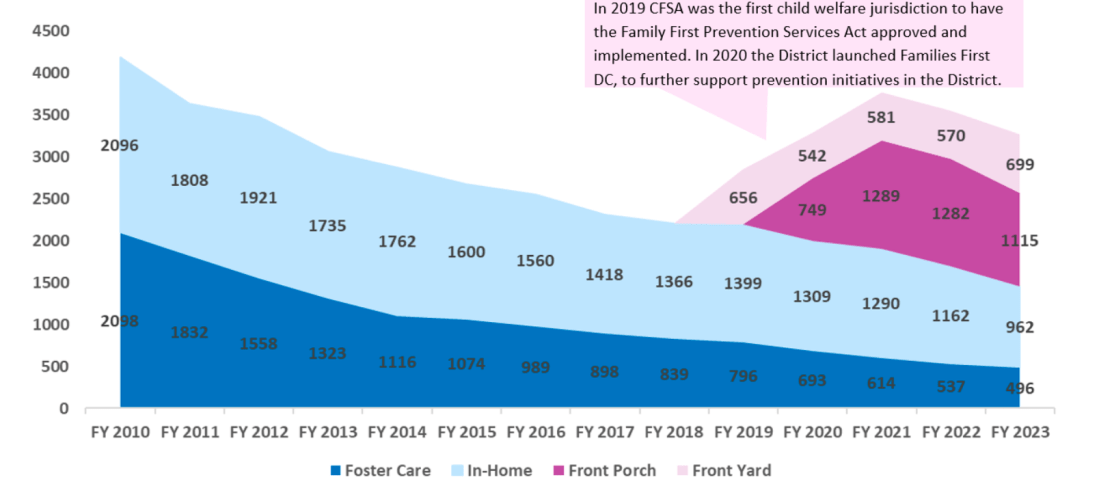
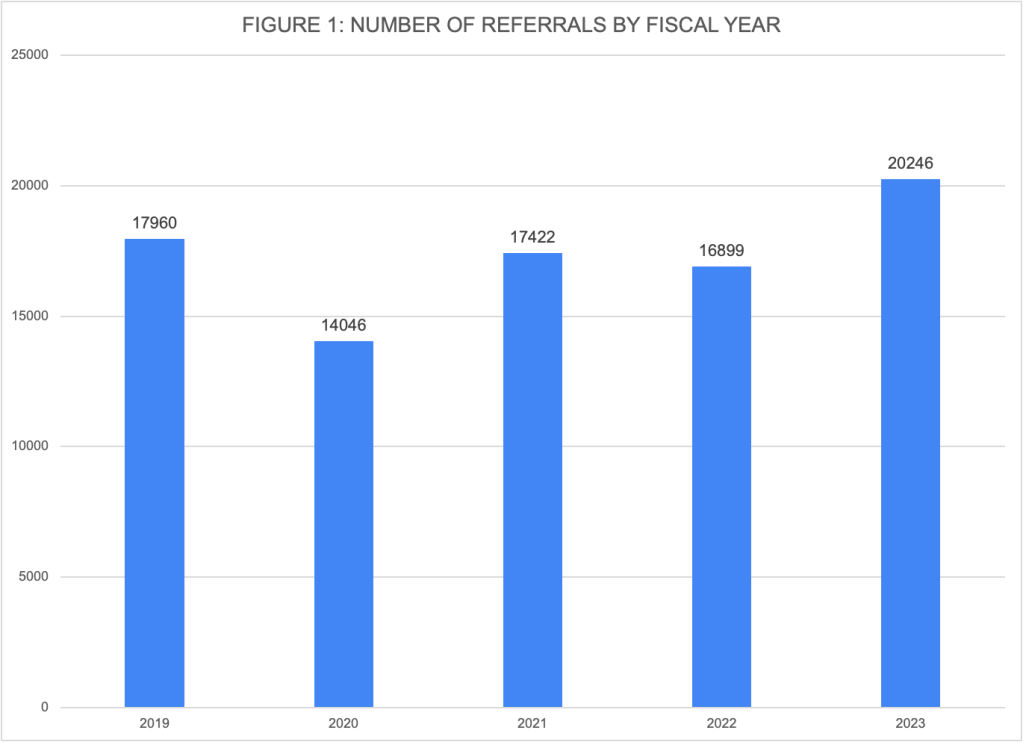


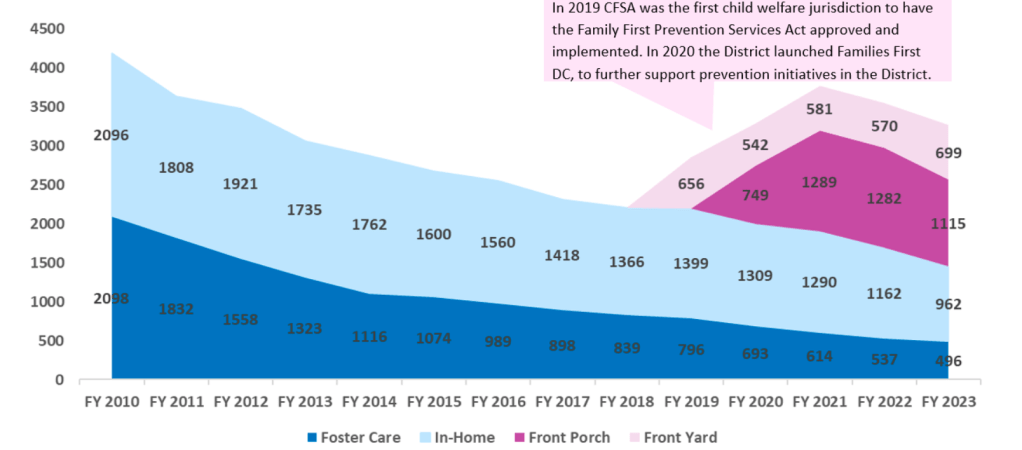
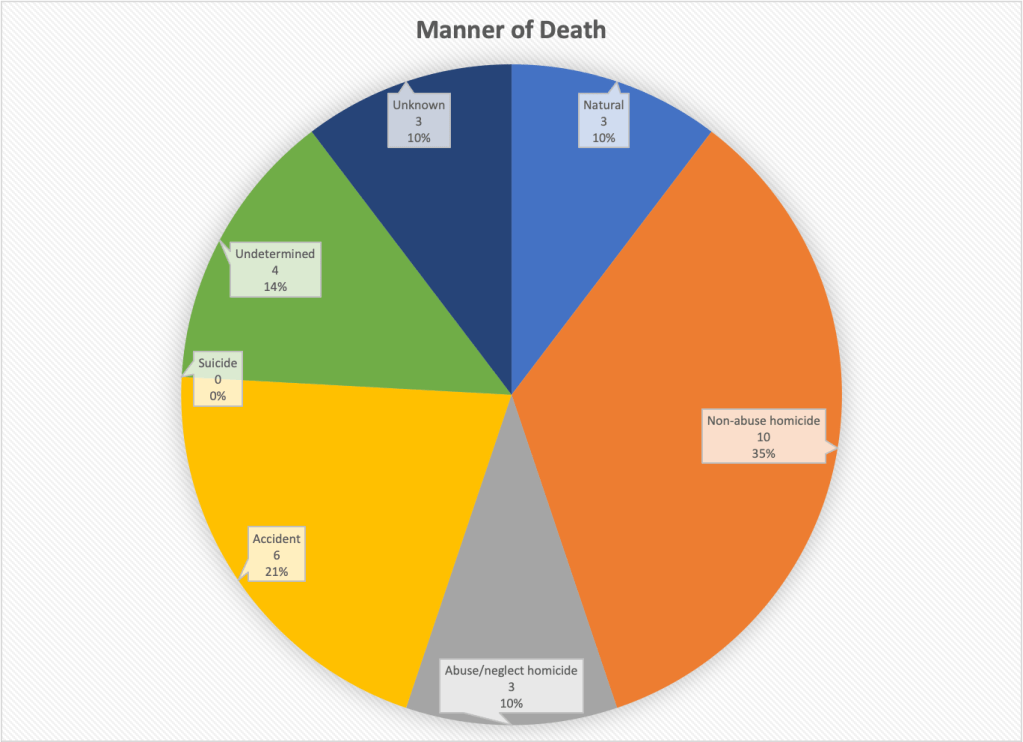
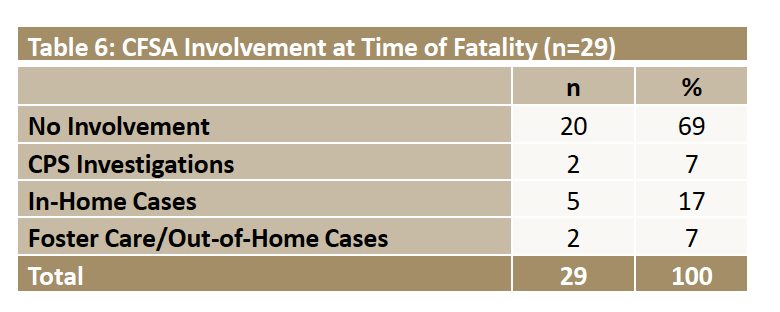

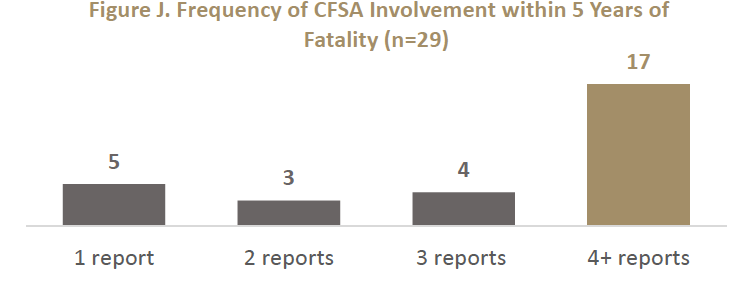
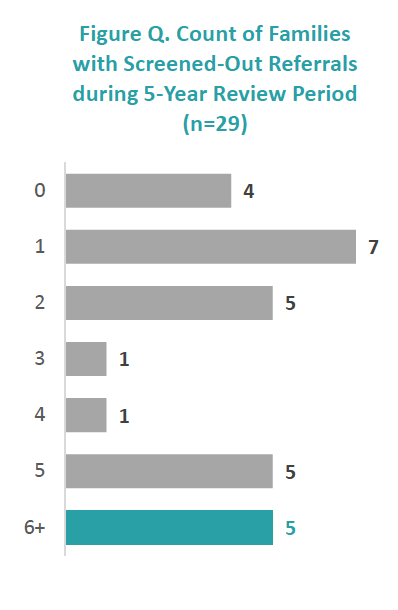


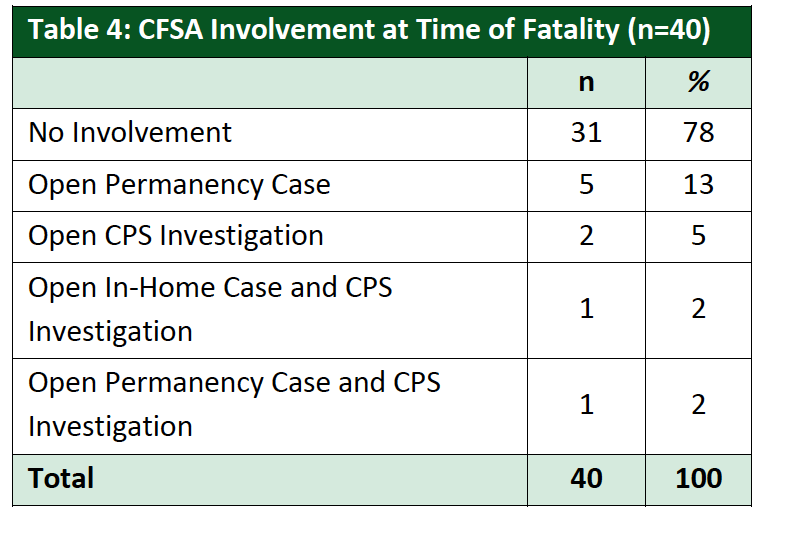
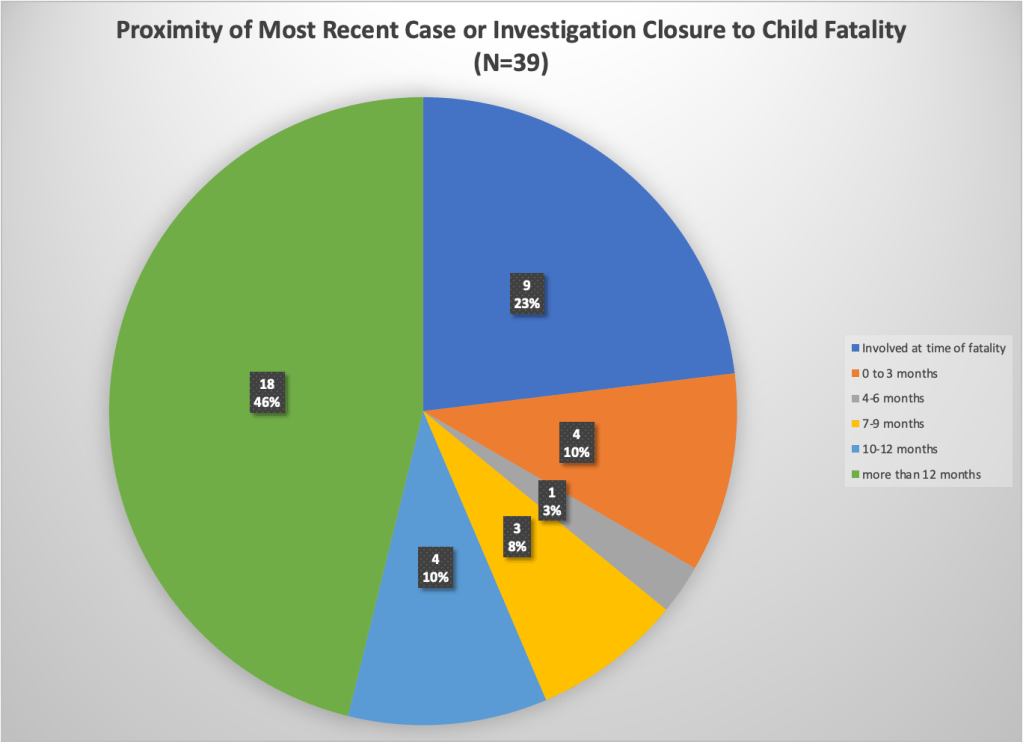
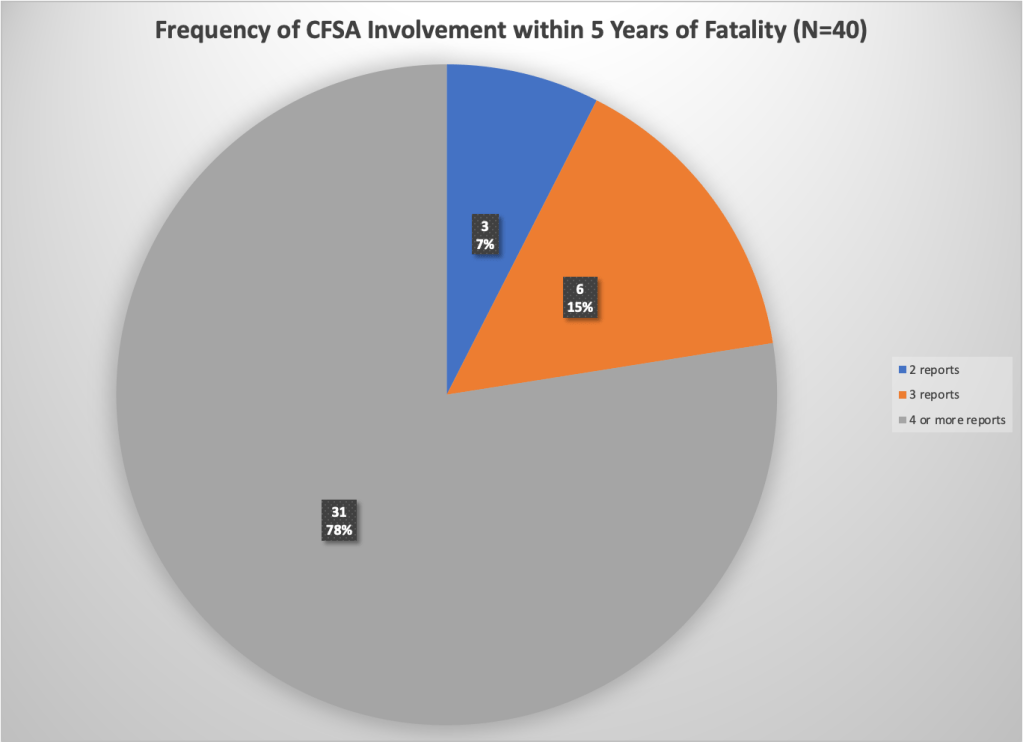
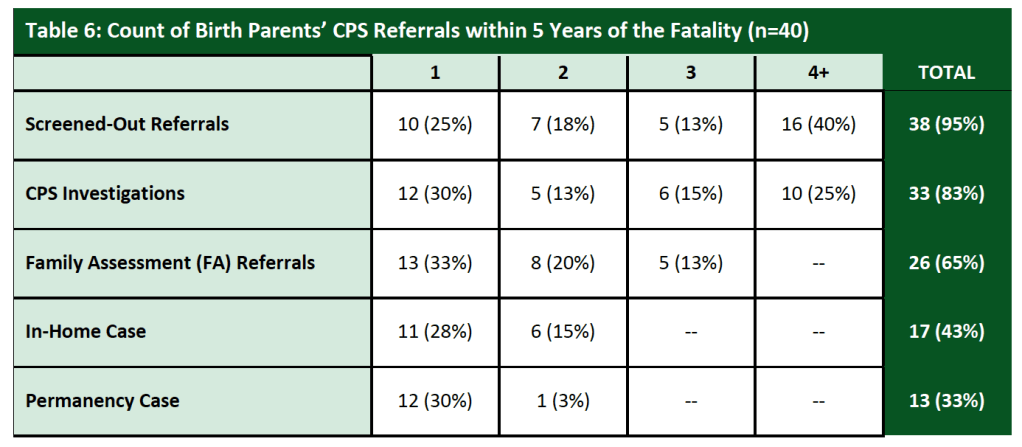
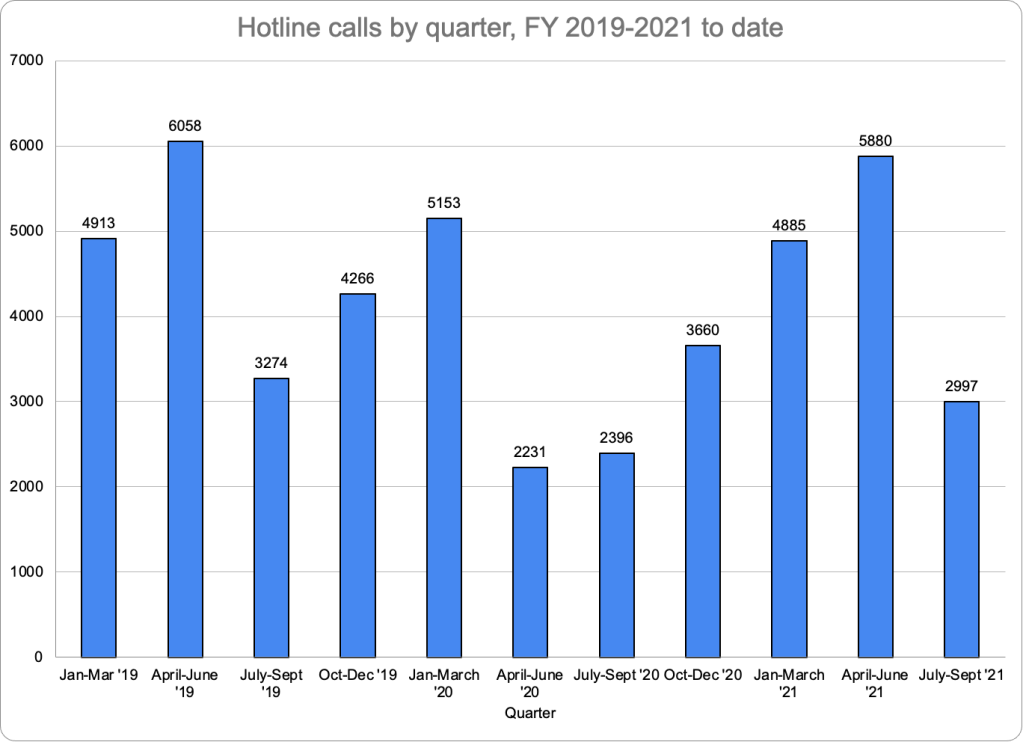

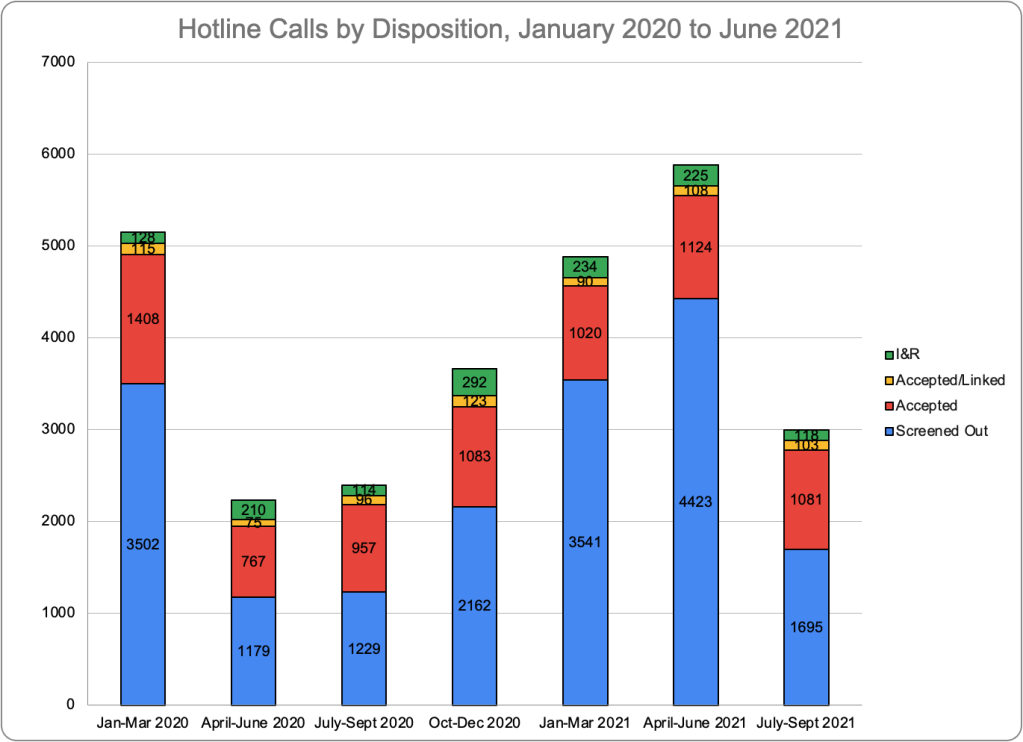
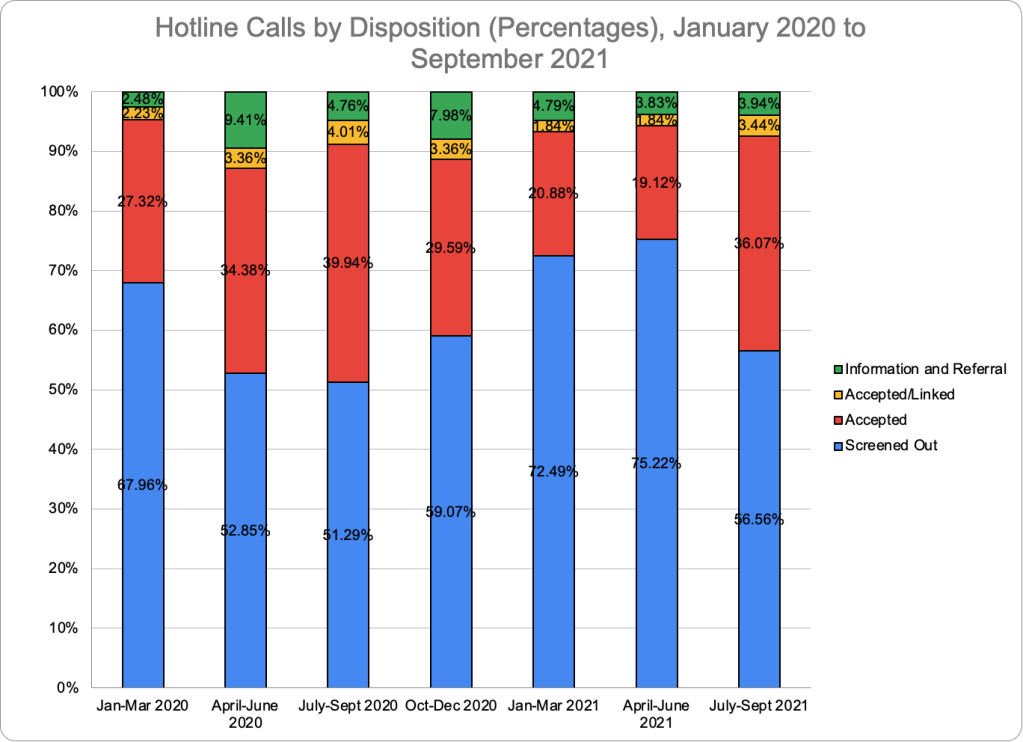
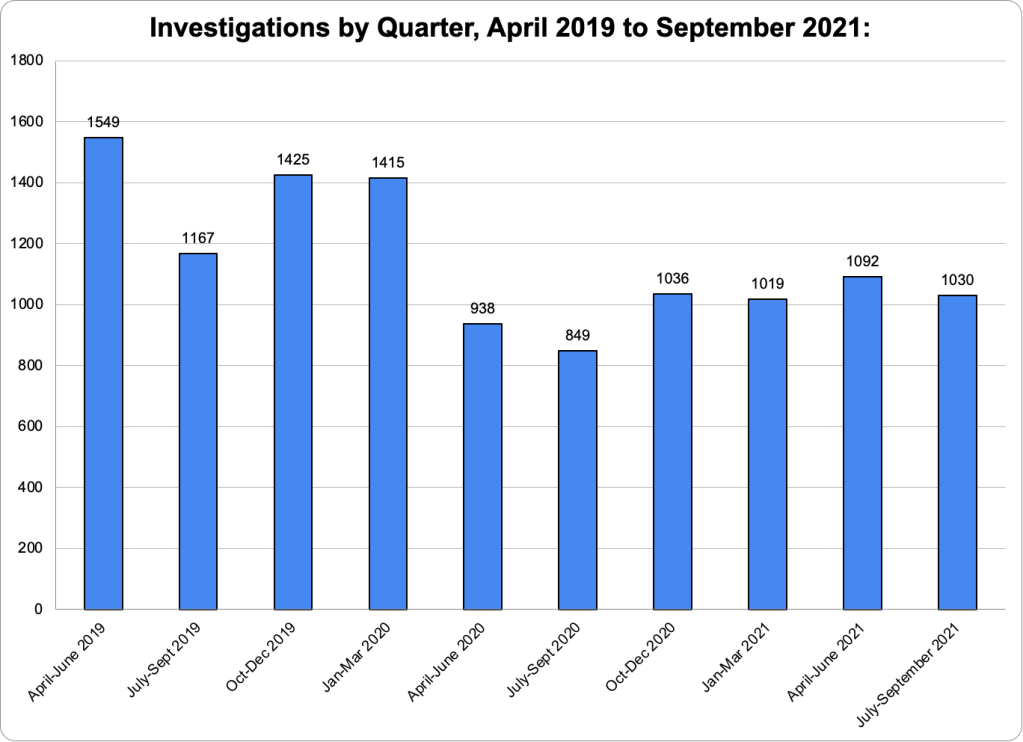
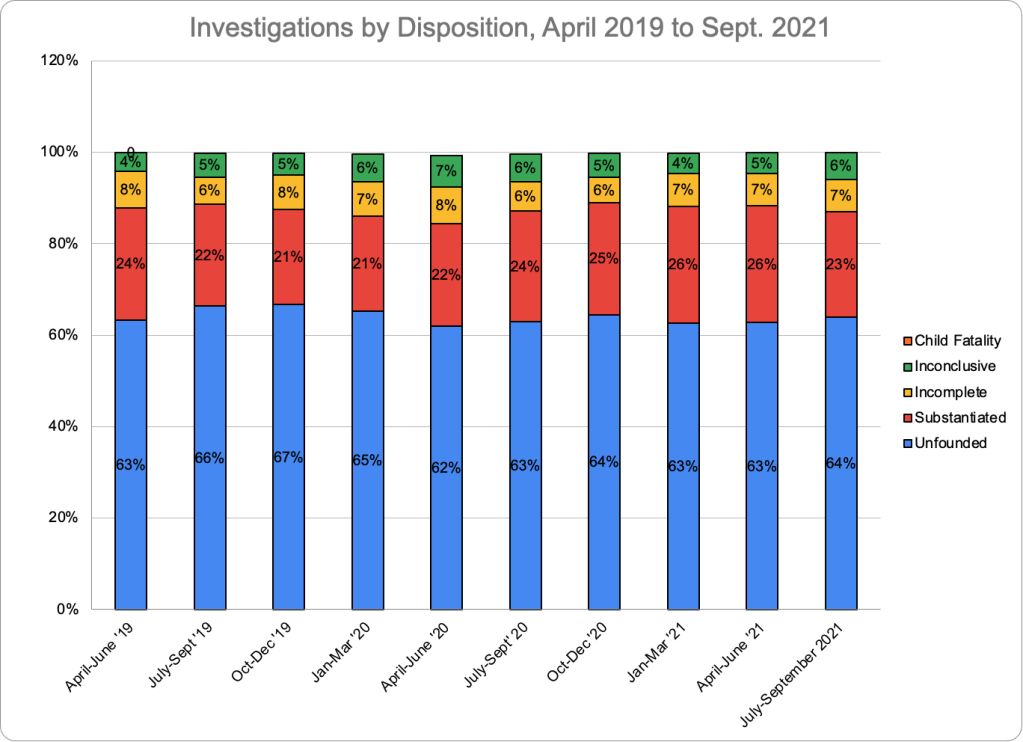
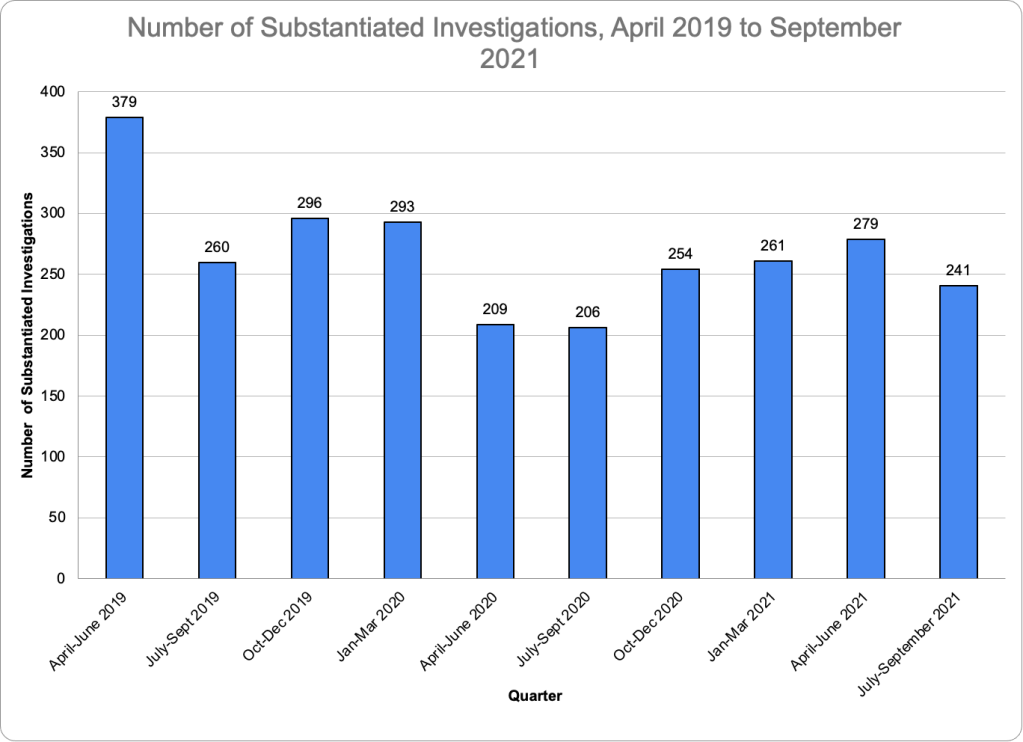



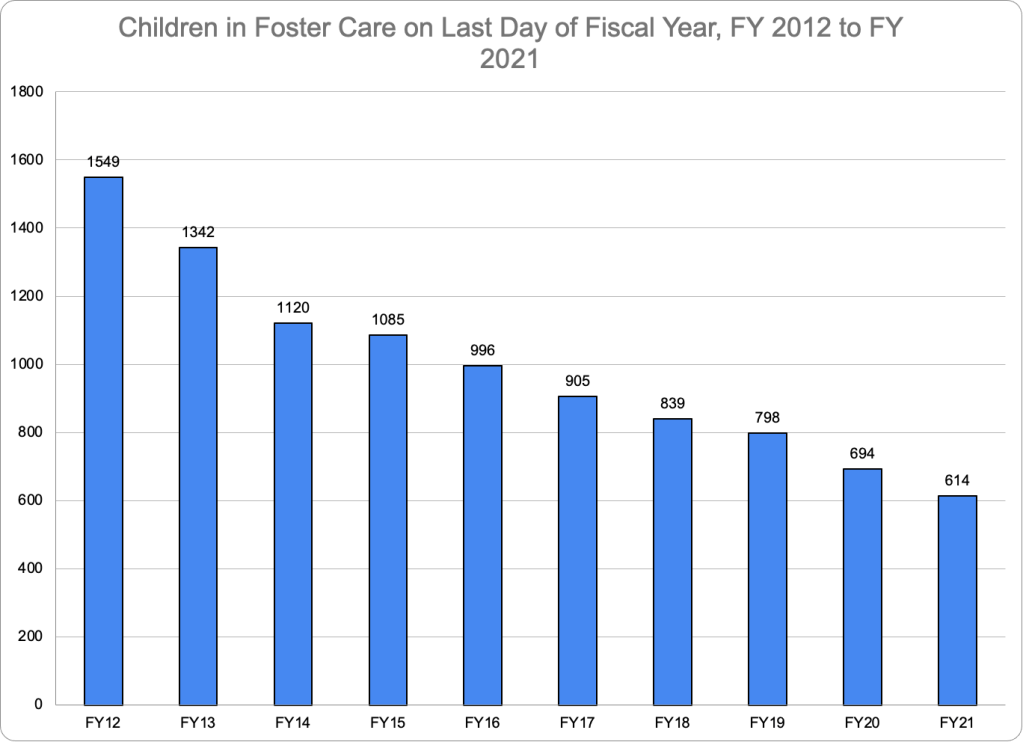
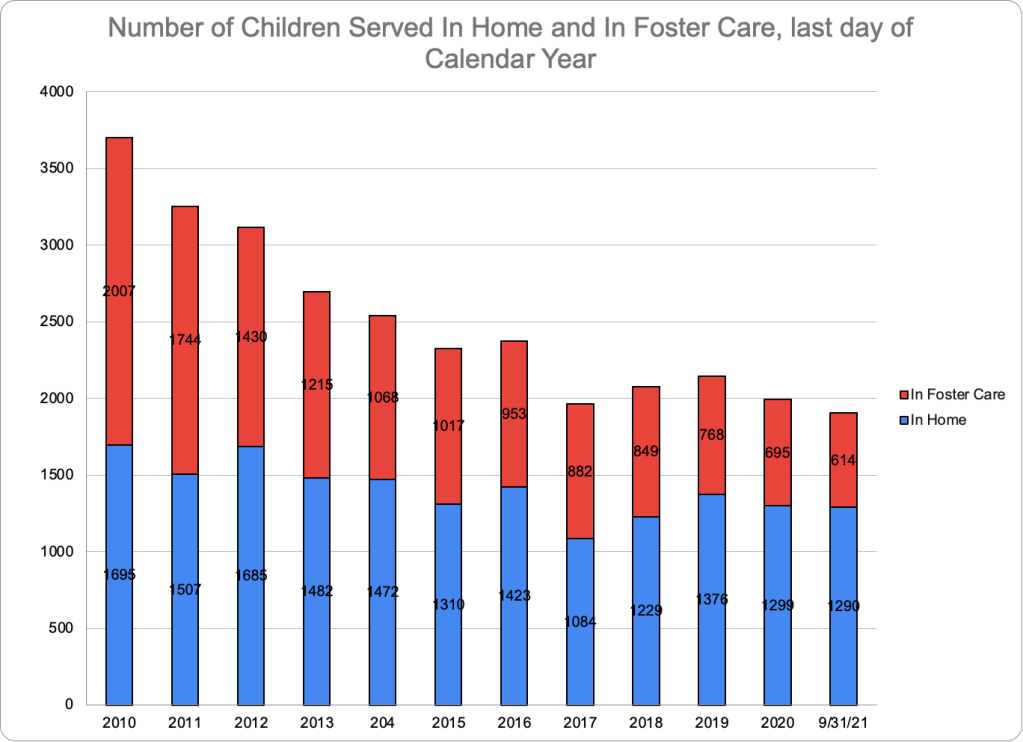
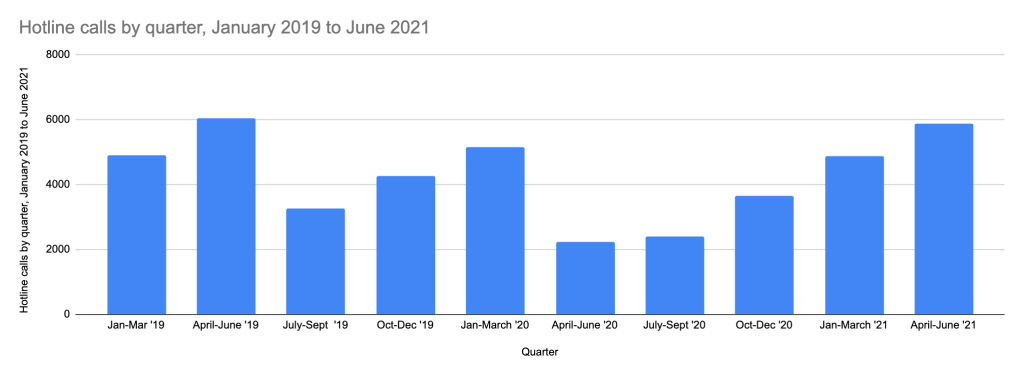
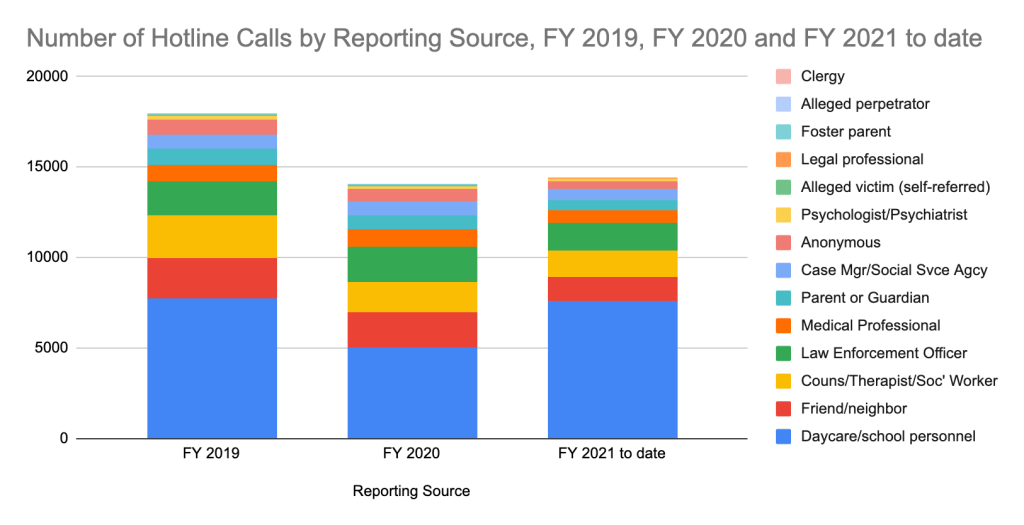

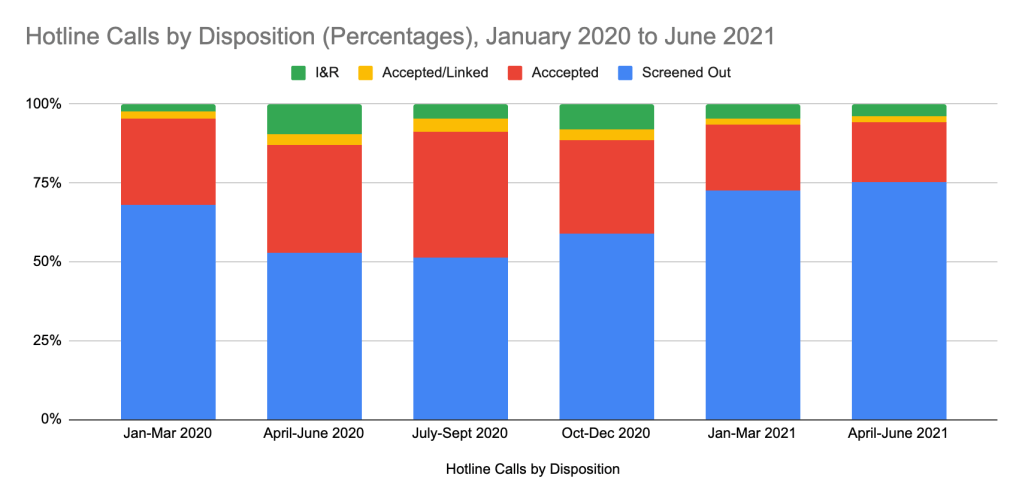
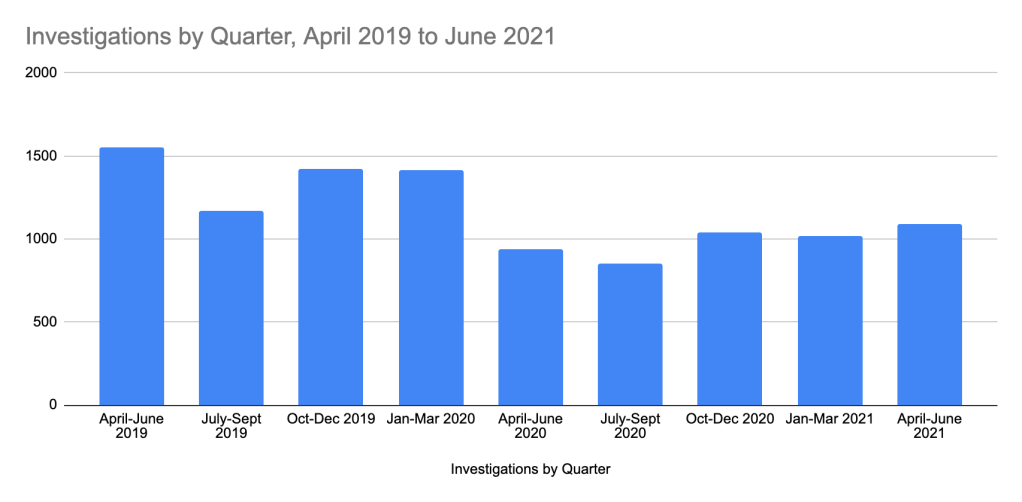
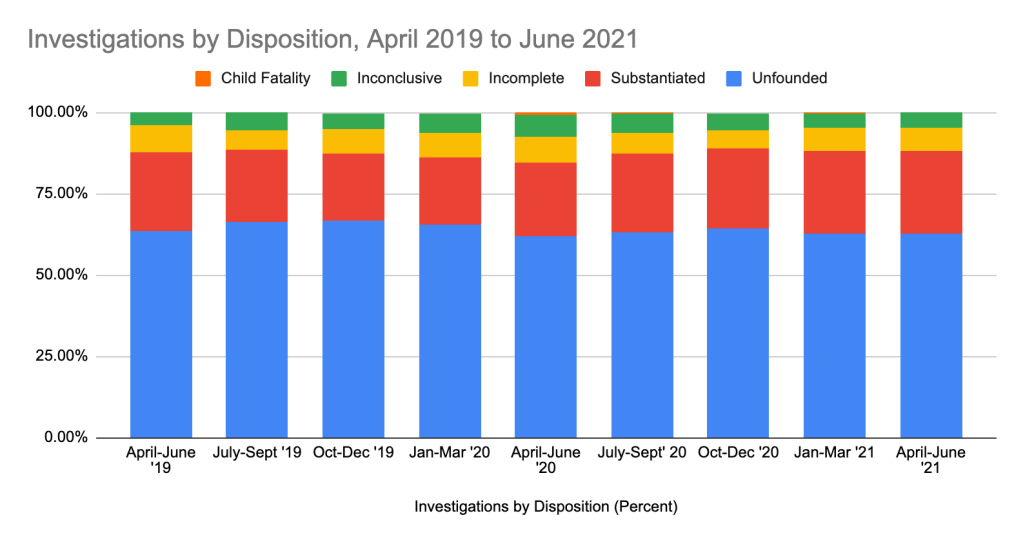
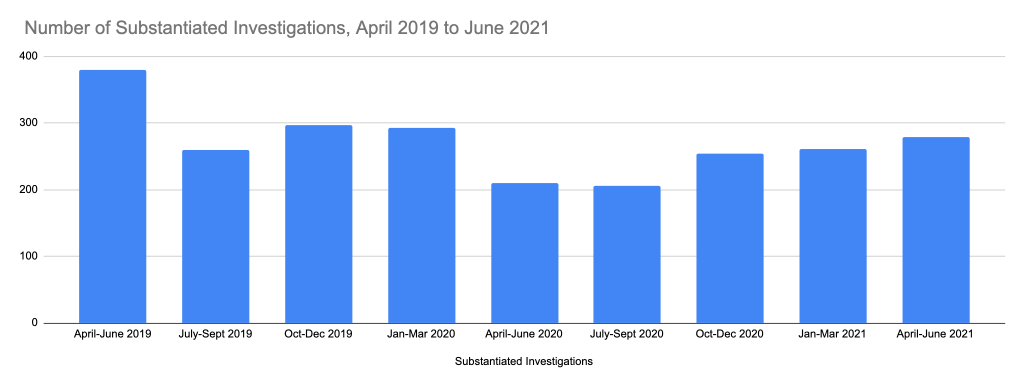
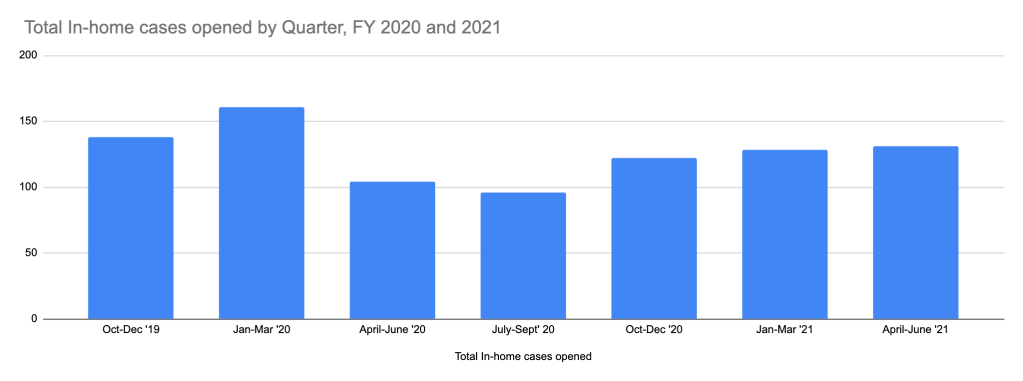

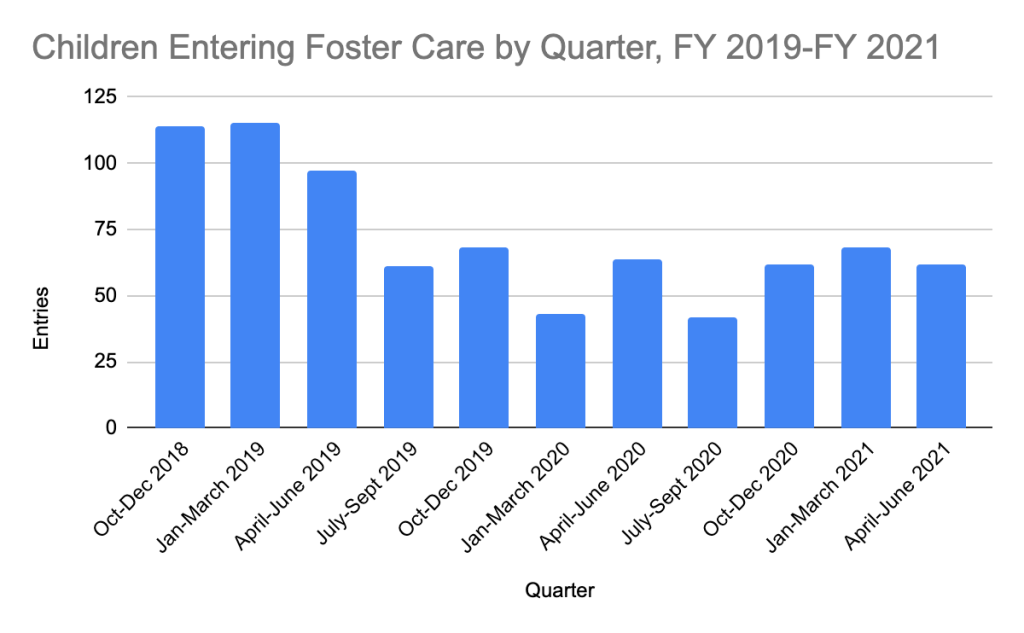
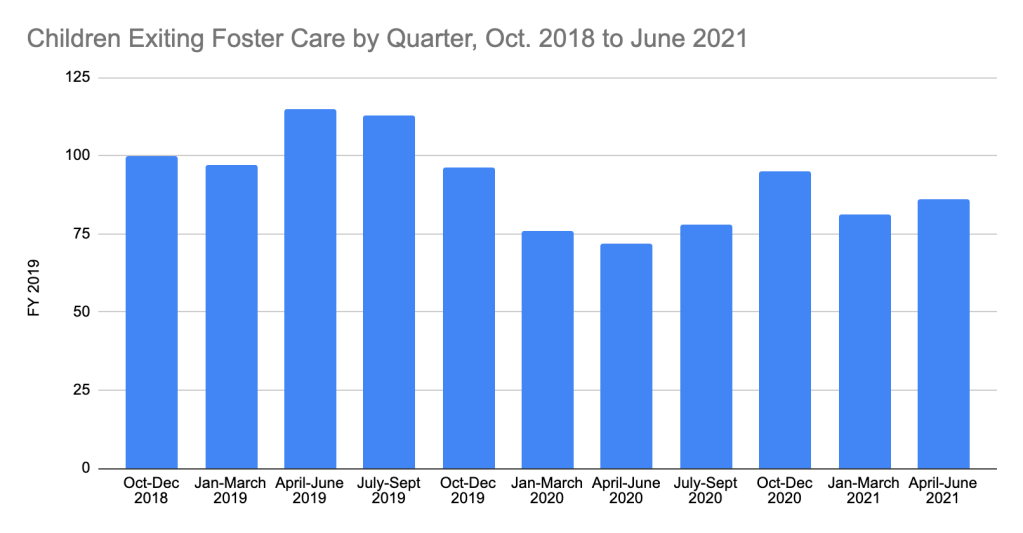
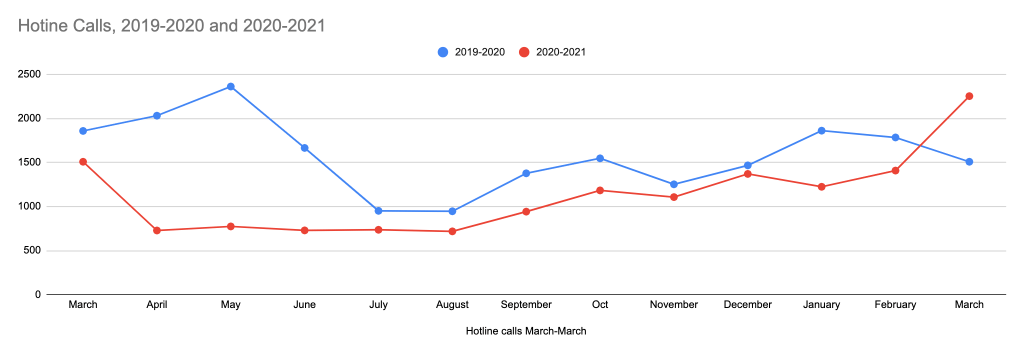
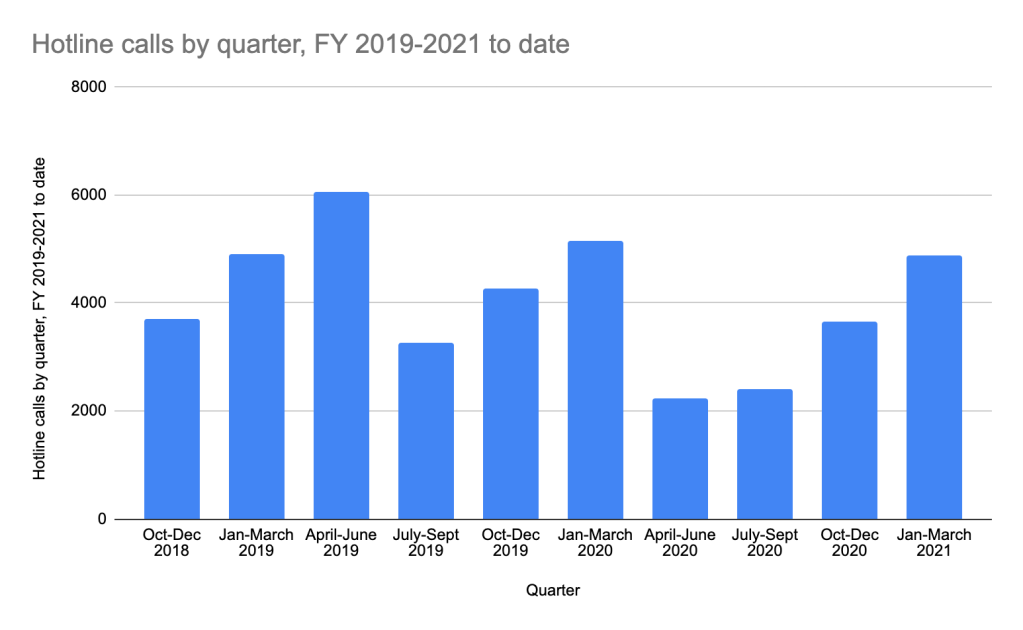
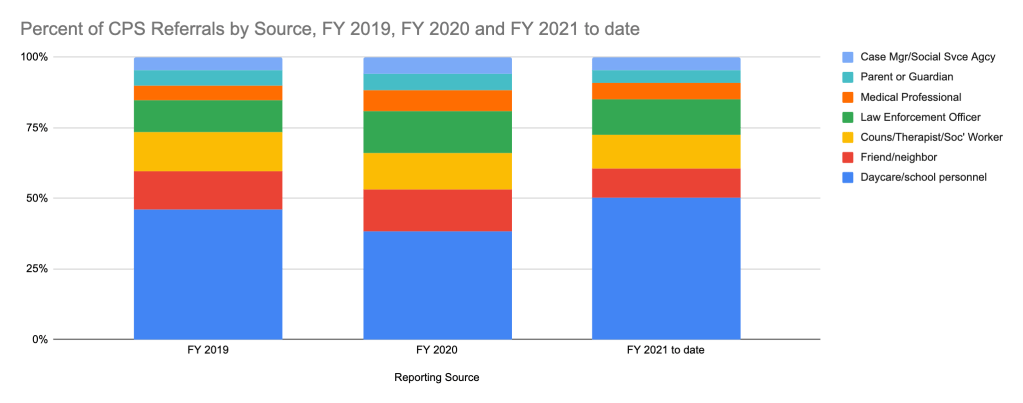
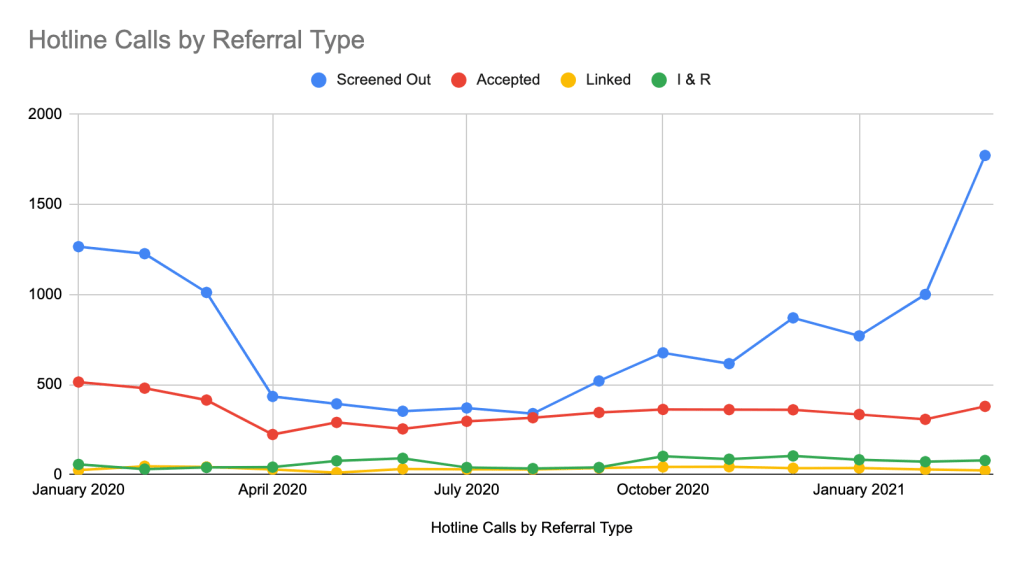

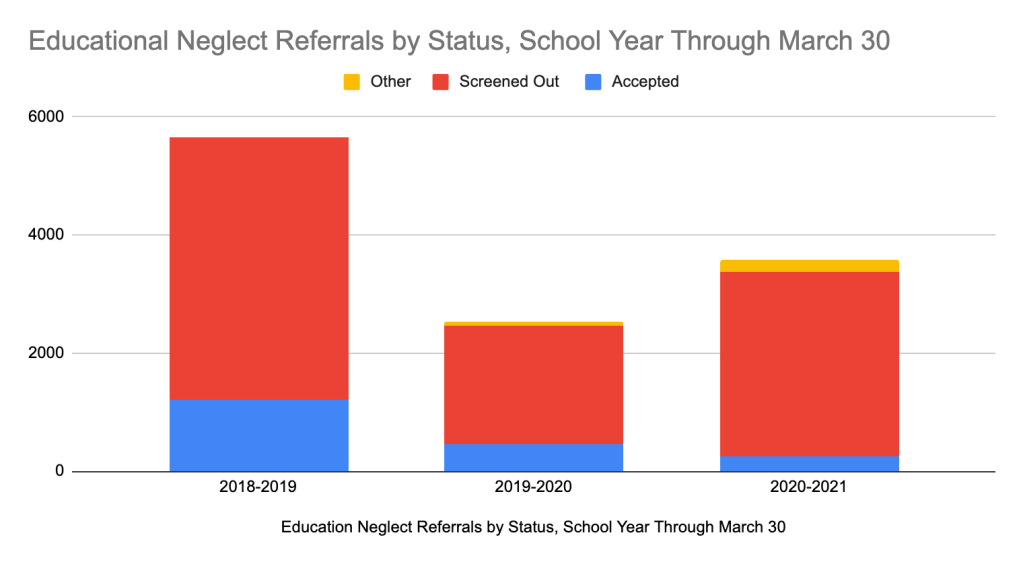
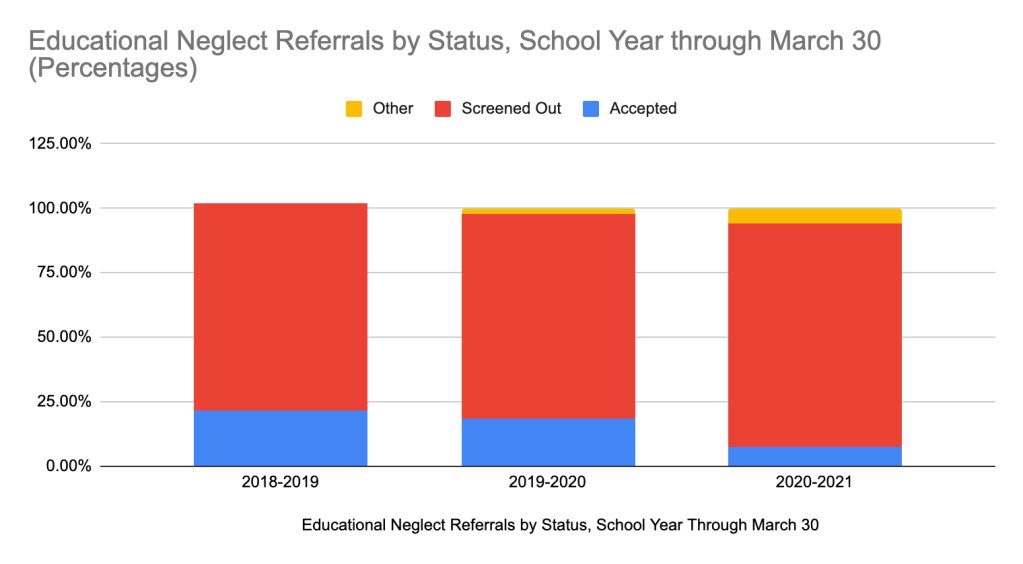
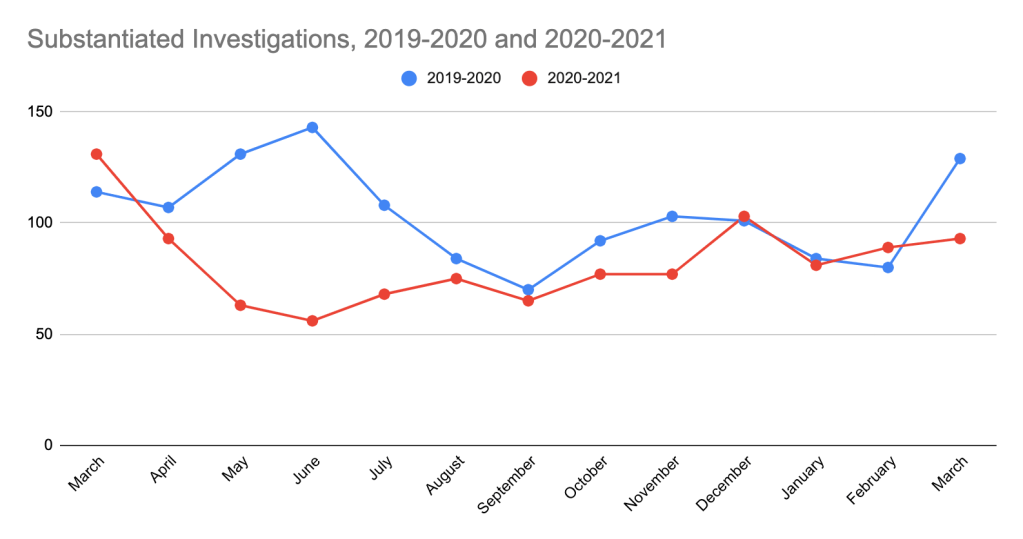
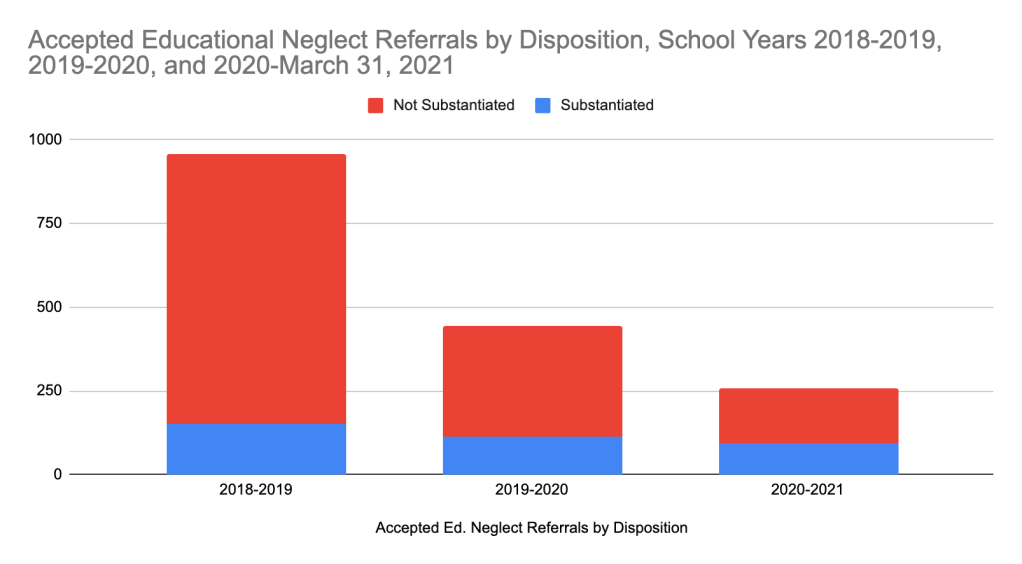

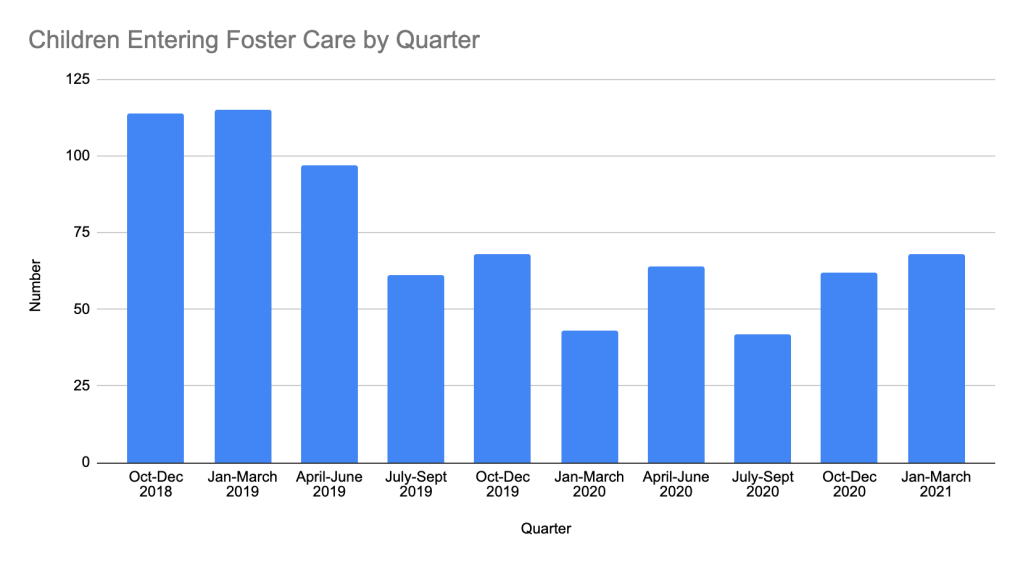

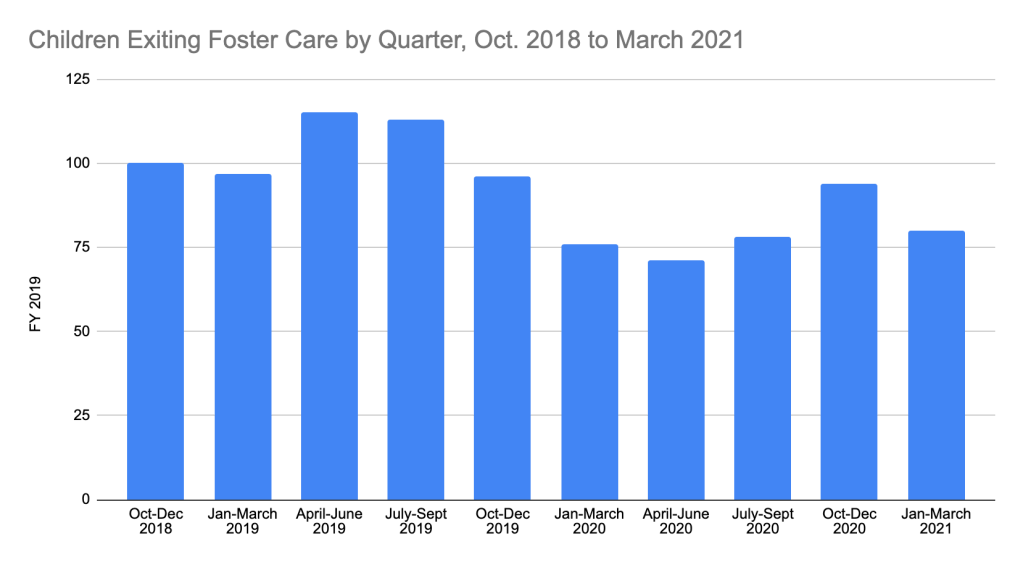




 Child Welfare Monitor DC